Introduction
Noticing blood in saliva can be frightening. Whether it appears after brushing, while coughing, or when you wake up in the morning, this symptom should never be ignored. In most cases, the cause is related to oral health problems, but sometimes it may signal infections or medical conditions affecting the throat or lungs.
This guide explains the reasons for spitting blood, how to identify the source, what symptoms matter most, and when medical attention becomes necessary.
What Does Blood in Saliva Indicate?
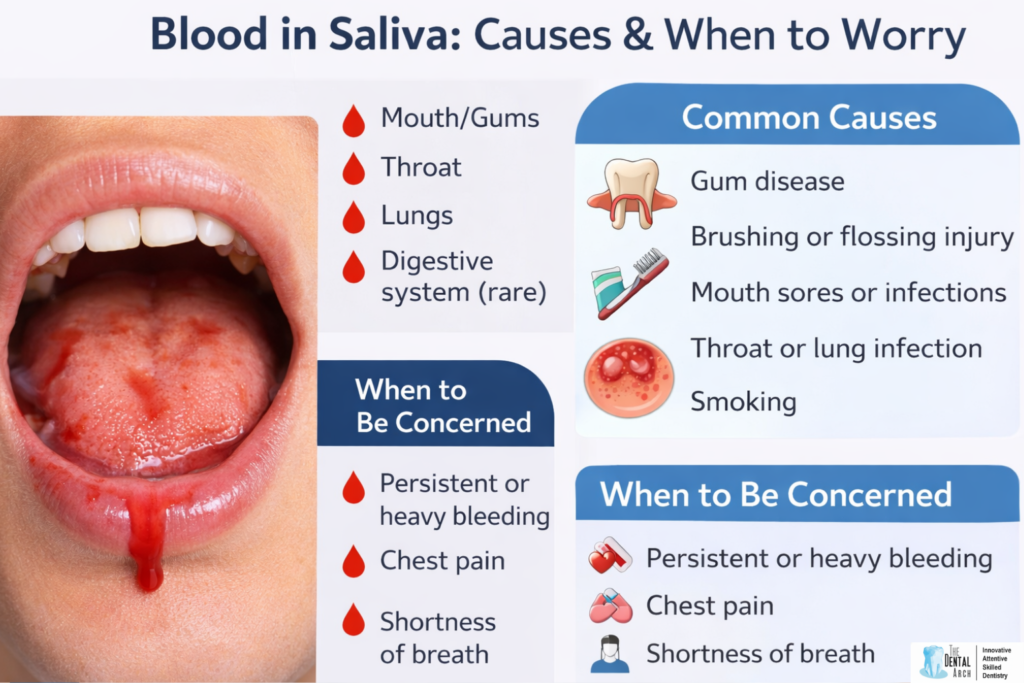
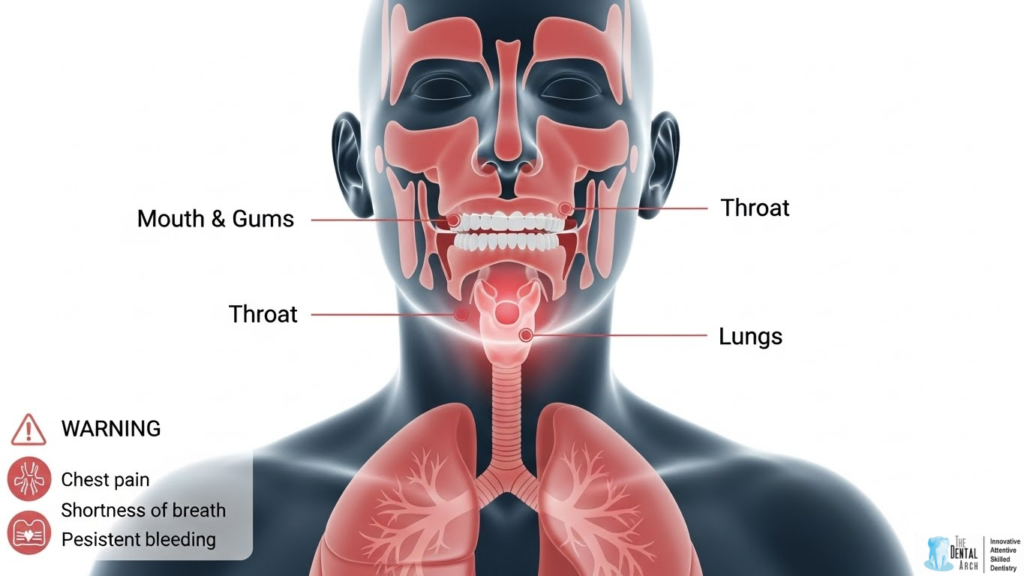
Blood in saliva occurs when blood from the mouth, gums, throat, or airways mixes with saliva. The source may be:
Identifying the origin helps determine whether the issue is minor or serious.
Most Common Reasons for Spitting Blood
1. Gum Disease (Leading Cause)
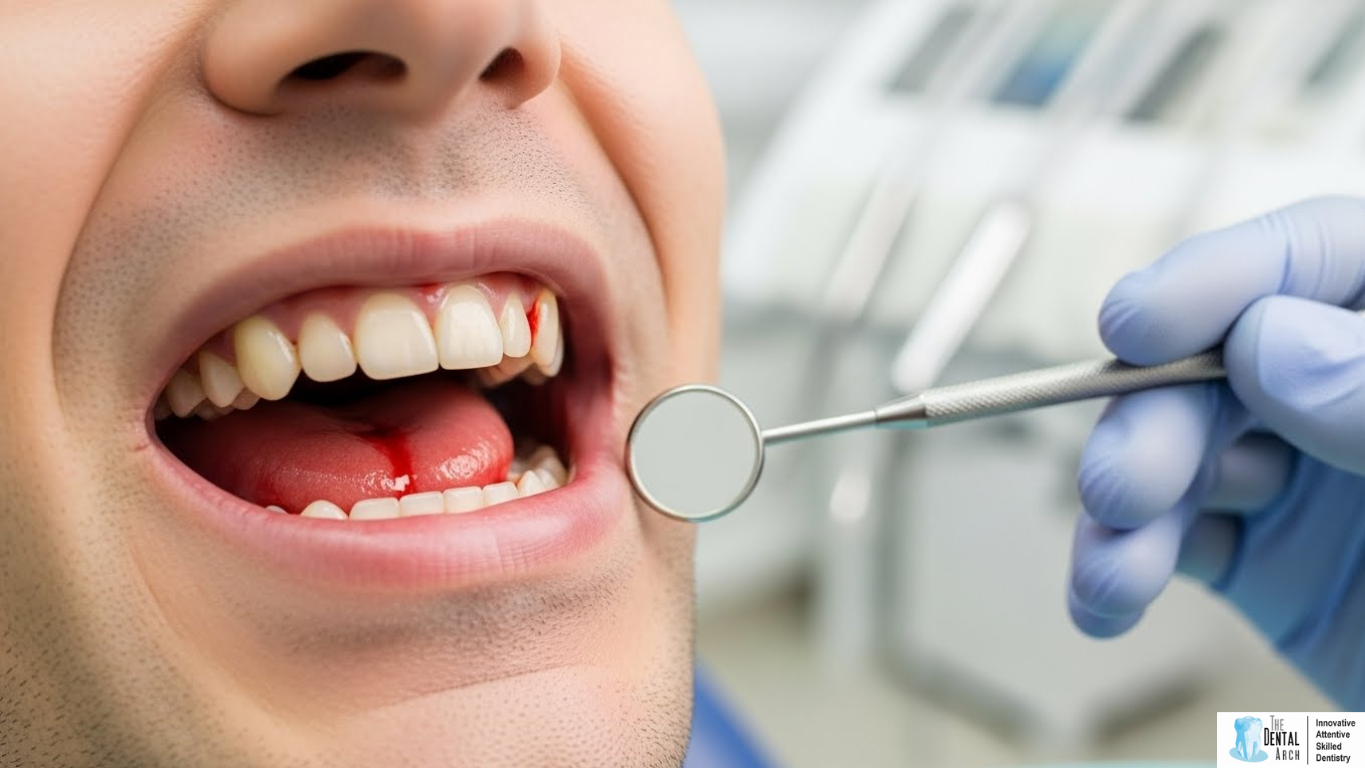
Inflamed gums bleed easily and are the most common reason for blood in saliva.
Symptoms:
Loose teeth in advanced stagesUntreated gum disease may progress from gingivitis to periodontitis. In severe cases where teeth become loose, dentists may recommend tooth extraction.
2. Brushing or Flossing Injury
Using a hard toothbrush or brushing aggressively can damage delicate gum tissue, causing bleeding that appears in saliva.
3. Mouth Sores & Oral Infections
In some cases, infections inside the tooth can also lead to gum swelling and bleeding. Dentists may recommend root canal treatment to remove the infection and save the tooth. You can also see root canal before and after results to understand how this procedure restores infected teeth.
4. Blood in Phlegm from Throat
Throat infections, tonsillitis, post-nasal drip, or dry throat irritation can cause small blood vessels to rupture.
Often seen with:
5. Blood in Phlegm with Sore Throat
When the throat is severely inflamed due to bacterial or viral infection, coughing or swallowing may produce slight bleeding that mixes with saliva.
6. Blood in Cough in Morning (First Time)
This is commonly associated with:
Dry air irritation
Acid reflux
Smoking
Bronchial inflammation
Morning coughing increases pressure on irritated blood vessels, causing minor bleeding.
7. Blood in Sputum (From Lungs)
This is more serious and may indicate:
Chest infection
Pneumonia
Tuberculosis
Chronic bronchitis
Lung injury
Blood that appears after deep coughing should always be medically evaluated.
Other Possible Causes
Vitamin C deficiency
High blood pressure
Blood clotting disorders
Smoking and tobacco use
Recent dental procedures
Dry mouth
Recent dental procedures such as wisdom tooth removal may also cause temporary bleeding in saliva. Following proper dos and don’ts after wisdom tooth extraction helps ensure safe healing.
Warning Signs That Require Immediate Care
Seek medical help if blood in saliva is accompanied by:
How Doctors Identify the Cause
Treatment Options
| Cause | Treatment |
|---|
| Gum disease | Professional dental cleaning, medications |
| Throat infection | Antibiotics or anti-inflammatory therapy |
| Lung infection | Antimicrobial treatment |
| Vitamin deficiency | Nutritional supplementation |
| Oral injuries | Local wound care |
| Smoking damage | Smoking cessation program |
Prevention Tips
Brush gently using a soft toothbrush
Floss daily
Schedule dental checkups every 6 months
Stay hydrated
Avoid tobacco
Treat throat infections early
Use a humidifier in dry environments
When Should You Be Concerned?
Occasional minor gum bleeding is common.
However, persistent, unexplained, or recurrent blood in saliva is not normal and should always be evaluated by a dentist or physician.
Conclusion
Blood in saliva is a symptom, not a disease. While many cases are linked to simple dental problems, others may reflect serious medical conditions. Early diagnosis ensures proper treatment and prevents complications.
If you continue to notice blood in your saliva, do not delay professional evaluation.