
A straight smile is often the cornerstone of a successful smile makeover. Beyond the aesthetic benefits, properly aligned teeth are easier to clean and contribute to better long-term oral health. If you are considering orthodontic treatment, the first thing you likely want to know is the variety of options available today.
Modern technology has evolved significantly, offering several different types of braces to suit various lifestyles, budgets, and clinical needs. In this guide, we will explore the different types of dental braces, answer how many types of braces are there, and help you determine which type of braces are the best for your specific journey.
When patients begin their research, a common starting point is asking: how many types of braces are there? Generally, there are four to five main categories of orthodontic appliances used in modern dentistry.
While the goal of all types of braces is to apply consistent pressure to move teeth into the desired position, the method of delivery varies. Whether you prefer the traditional look or a nearly invisible solution, the different types of dental braces available today ensure that there is a fit for everyone, from children to working professionals. Understanding how many types of braces are there helps you narrow down your choices before your first consultation.
To make an informed decision, it is essential to look at the unique characteristics of the different types of braces. Each system has its own set of advantages:
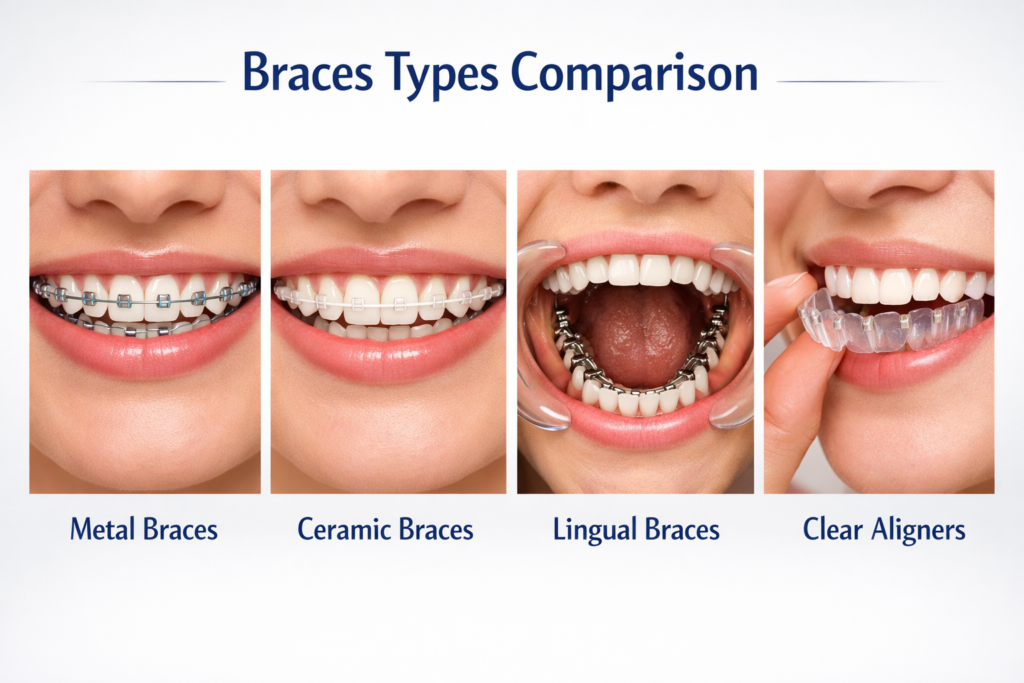
These are the most common types of braces. They consist of high-grade stainless steel brackets and wires. Modern metal braces are much smaller and more comfortable than those used in the past. They remain one of the most effective different types of dental braces for complex cases.
Ceramic braces function similarly to metal ones but use clear or tooth-colored brackets. Many adults prefer these different types of braces because they blend in with the natural color of the teeth, making them less noticeable while still providing the strength of traditional orthodontics.
If you are looking for total discretion among the different types of dental braces, lingual braces are an excellent option. These are placed on the back (tongue side) of the teeth. Because they are hidden from view, they are a popular choice for public speakers and models.
While not “braces” in the traditional sense, aligners are often grouped into the types of braces discussions. These involve a series of custom-made, removable plastic trays. They are widely considered one of the most convenient different types of braces because you can remove them to eat and brush.
A question every orthodontist hears is: “which type of braces are the best?” The truth is, there is no single “best” option for everyone. The answer to “which type of braces are the best” depends on three main factors:
Ultimately, your orthodontist will help you decide which type of braces are the best after performing a detailed scan and clinical exam.
Choosing between the different types of dental braces also means considering your daily habits. For instance:
If you are a frequent traveler, certain different types of dental braces require fewer office visits than others.
Navigating the different types of braces is the first step toward the smile you’ve always wanted. Whether you are weighing the pros and cons of different types of dental braces for yourself or your child, understanding how many types of braces are there allows you to have a more productive conversation with your dental professional.
When you finally ask your orthodontist, “which type of braces are the best for me?”, you will be equipped with the knowledge to choose a path that balances comfort, cost, and a beautiful final result.
Adults can choose from all the major types of braces available today, including metal braces, ceramic braces, lingual braces, and clear aligners. The right option depends on your aesthetic preferences, lifestyle, and the complexity of tooth movement required.
For complex orthodontic movements, traditional metal braces usually deliver the fastest and most precise results. However, advanced clear aligner systems are now capable of achieving excellent results in many cases and are continually closing the gap in treatment speed.
Yes, the cost of treatment varies by system. Metal braces are generally the most affordable option, while ceramic braces, lingual braces, and clear aligners typically cost more due to the materials, customization, and technology involved.
There are two primary types of braces considered nearly invisible: Clear Aligners (such as Invisalign) and Lingual Braces, which are placed behind the teeth and completely hidden from view.
For most children, traditional metal braces are the best choice. They are durable, cost-effective, and fixed in place, making them ideal for younger patients who may forget to wear removable appliances consistently.
In most cases, switching between systems during treatment is not recommended. Each treatment plan is customized for a specific appliance, and changing systems often results in additional costs, extended treatment time, and compromised efficiency.