How to Fix Teeth Without Braces: Your Complete Guide to Straighter Teeth Without Traditional Braces
Crooked, crowded, or misaligned teeth can affect more than just your smile they can impact confidence, oral health, and even how you bite or speak. Many people want how to fix teeth without braces, especially if they want a less visible or more comfortable solution than traditional metal braces. Fortunately, modern dentistry offers several effective alternatives that can help you achieve a straighter smile without the hassle of brackets and wires.
While many people explore ways on how to fix teeth without braces, traditional orthodontic treatment is still one of the most reliable solutions. You can learn more about the braces cost in India and available treatment options before deciding which approach suits you best.
In this detailed guide, we’ll explore all the top ways how to fix teeth without braces, what each option involves, who they’re best for, and how to decide which solution might be right for you.
What Does “Fixing Teeth Without Braces” Really Mean?
When people search how to fix teeth without braces, they’re usually looking for options that:
- Improve the appearance of crooked or misaligned teeth
- Reduce gaps or crowding in the smile
- Do not involve traditional metal brackets and wires
- Are discreet, comfortable, and often removable
Not all methods actually move teeth the same way braces do — some enhance alignment cosmetically, while others genuinely reposition teeth over time.
Why Some People Want to Fix Teeth Without Braces
Traditional braces have been around for decades, and although they are highly effective, they come with certain downsides:
- Visible brackets and wires
- Potential difficulty cleaning teeth
- Dietary restrictions
- Longer treatment times for some cases
If you’re asking how to fix teeth without braces, it’s likely because you want a solution that is less intrusive, more aesthetically pleasing, or better suited to your lifestyle. Fortunately, there are several alternatives available.
1. Clear Aligners: A Popular Way to Fix Teeth Without Braces
One of the most effective and widely used answers to how to fix teeth without braces is clear aligner therapy, including well-known systems like Invisalign.
What Are Clear Aligners?
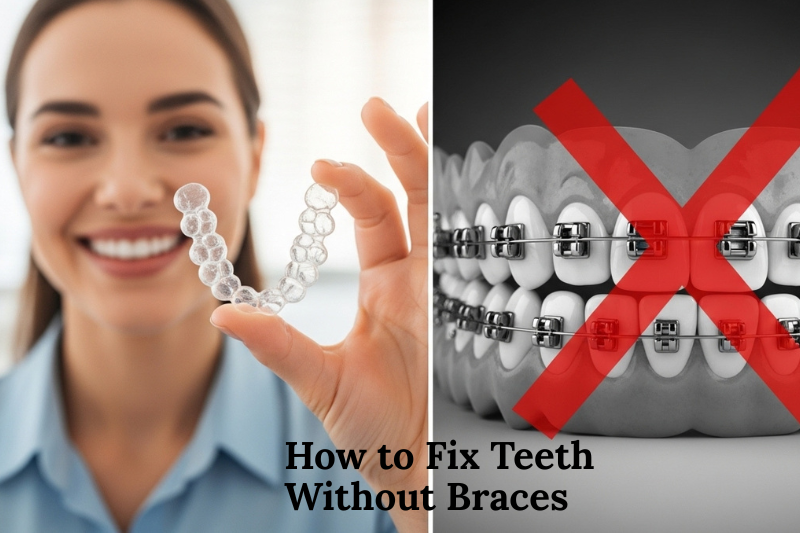
Clear aligners are custom-made, transparent trays that fit snugly over your teeth and gradually shift them into better alignment. Unlike traditional braces:
- They’re virtually invisible
- They’re removable for eating and cleaning
- They’re more comfortable than metal brackets
Clear aligners work by applying gentle, consistent pressure to teeth to move them into the desired position over time. They’re most effective for mild to moderate alignment issues.
How Clear Aligners Work
- Your dentist or orthodontist takes 3D scans of your teeth
- A treatment plan is created to map tooth movements
- You receive a series of aligner trays
- You switch to a new set every 1–2 weeks
- You wear them for about 20–22 hours a day for best results
Clear aligners are one of the top solutions when people look for how to fix teeth without braces because they give real alignment results without the appearance of traditional braces.
2. Retainers: Simple but Effective for Minor Adjustments
Retainers aren’t just for wearing after braces — in some cases, especially with mild misalignment, a retainer alone can help improve tooth position.
How Retainers Help
- They’re less visible than braces
- Often removable
- Can gently shift teeth over time
Retainers are generally recommended when only small changes are needed, but they can be a valuable part of an overall alignment plan for those learning how to fix teeth without braces.
3. Veneers: Cosmetic Smile Transformation Without Braces
If your main goal is a straighter-looking smile rather than full orthodontic correction, porcelain veneers may help.
What Are Veneers?
Veneers are ultra-thin shells of porcelain or composite resin that are bonded to the front surface of your teeth. They can:
- Close gaps
- Make teeth appear straighter
- Improve the shape and color of your teeth
Veneers don’t move teeth like braces or aligners, but they create the appearance of a straight smile. You can also see before and after veneers results to understand their cosmetic impact.
Note: Veneers are semi-permanent and require some removal of tooth enamel. They typically need replacement every 5–10 years.
4. Dental Bonding: A Subtle Fix for Alignment Appearance
Dental bonding involves applying a tooth-colored resin to reshape teeth, close gaps, or adjust uneven edges.
When Bonding Is Useful
Bonding can help if you’re asking how to fix teeth without braces but have:
- Small gaps between teeth
- Slightly uneven front teeth
- Minor cosmetic alignment concerns
Unlike veneers, bonding does not require alteration of enamel, making it a conservative cosmetic option. However, it may need touch-ups or replacement over time.
5. Dental Crowns: Strength and Alignment in One
Dental crowns are caps placed over teeth to improve their shape, strength, and appearance. While crowns don’t move teeth, they can help align them cosmetically by:
- Adjusting tooth shape
- Changing size or look
- Making teeth appear more even
Crowns are most useful for teeth that also need restorative care — for example, after decay or damage — or in combination with dental implants to restore function and appearance.
6. Palatal Expanders: Creating Space to Fix Teeth Without Braces
For patients with narrow upper arches, especially children and teens, palatal expanders can help widen the mouth, making room for adult teeth to align more naturally.
How Palatal Expanders Work
- A device sits across the palate
- Regular adjustments gently widen the jaw
- More space helps reduce crowding
Palatal expanders are a useful part of treatment plans that focus on how to fix teeth without braces, especially early in development.
Who Should Consider These Alternatives?
Choosing the right way how to fix teeth without braces depends on:
- Severity of misalignment
- Whether aesthetic or functional correction is needed
- Budget and treatment timeline
- Oral health status
Mild to moderate issues are often successfully corrected with clear aligners or cosmetic options, but more complex alignment problems may still require braces or even surgical consultation.
When Braces Might Still Be Necessary
Despite many advances, braces remain the gold standard for severe crowding, major bite problems, or large shifts in jaw alignment. Patients can compare metal vs ceramic braces to choose the option that best fits their needs.
- Severe crowding
- Major bite problems (overbite, underbite)
- Large shifts in jaw alignment
A qualified dentist or orthodontist can help determine if you truly can fix teeth without braces or if traditional orthodontics is the most predictable solution.
Final Thoughts on How to Fix Teeth Without Braces
If your goal is how to fix teeth without braces, today’s dental options provide many effective and attractive alternatives. From clear aligners that genuinely move teeth to cosmetic solutions like veneers, dental bonding, and crowns that improve smile appearance, there are choices to fit different needs and lifestyles.
The best way to decide is through a comprehensive dental exam with a qualified dentist or orthodontist. In many cases, combining multiple approaches — such as clear aligners and cosmetic enhancements — can deliver both health and aesthetic benefits.