How to Fix Crooked Teeth: Causes, Solutions & Expert Guidance
Crooked teeth are one of the most common dental concerns among adults and children alike. Whether it affects your confidence, oral hygiene, or bite function, knowing how to fix crooked teeth is important for both your health and your smile. From modern orthodontic treatments to cosmetic solutions, there are effective ways to achieve a straighter smile.
In this comprehensive guide, we explore how to fix crooked teeth, what causes dental misalignment, and the best treatment options available today.
What Does It Mean to Have Crooked Teeth?
Crooked teeth refer to misaligned, twisted, or crowded teeth that don’t line up properly when you bite. Although not all cases require intervention, many people seek treatment for both aesthetic and functional reasons.
What Causes Crooked Teeth?
Before diving into how to fix crooked teeth, it helps to understand why crooked teeth happen in the first place. The major causes include:
1. Genetics and Heredity
Crooked teeth often run in families. Jaw and tooth size can be inherited, leading to overcrowding or misalignment when there isn’t enough space for permanent teeth to grow normally.
2. Myofunctional Habits
Habits such as thumb sucking, prolonged pacifier use, tongue thrusting, and mouth breathing can push teeth out of their natural positions, leading to crooked alignment.
3. Malocclusion (Misaligned Bite)
Malocclusion occurs when the upper and lower jaws don’t fit together correctly. This can result in conditions like overbite or underbite and is a common cause of crooked teeth.
4. Poor Dental Care
Untreated dental problems, such as cavities and gum disease, can lead to shifting teeth and misalignment, contributing to crookedness over time.
5. Facial Injury
Trauma to the face or mouth can knock teeth out of place or change the alignment of the bite, making teeth appear crooked.
Understanding the underlying cause of your crooked teeth can help your dentist or orthodontist develop the most effective plan for how to fix crooked teeth.
Why Straightening Crooked Teeth Matters
Some people view crooked teeth as purely cosmetic — but the effects can go much deeper. Crooked teeth may lead to:
- Difficulty chewing properly
- Increased risk of gum disease and tooth decay
- Jaw pain and temporomandibular joint (TMJ) issues
- Speech difficulties
- Uneven tooth wear due to poor bite patterns
Correcting misalignment not only improves your smile but also enhances long-term oral health.
How to Fix Crooked Teeth: Proven Treatment Options
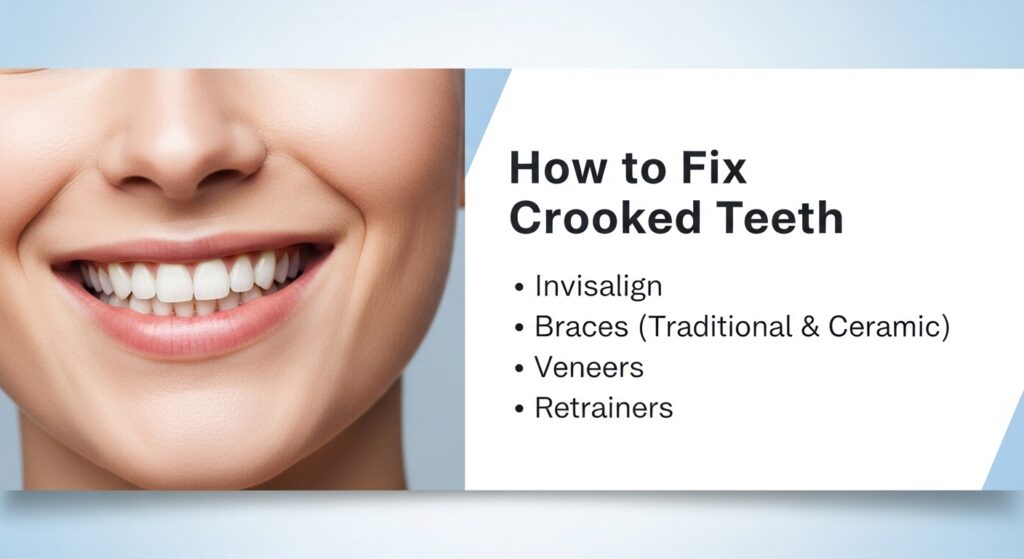
Today’s dentistry offers a wide range of options for how to fix crooked teeth, from traditional methods to discreet and cosmetic solutions.
1. Braces: Classic and Effective
Traditional metal braces remain one of the most reliable ways to fix crooked teeth, especially in moderate to severe cases. They use brackets and wires to apply continuous pressure, gradually moving teeth into alignment.
Pros of Braces:
- Effective for a wide range of alignment issues
- Consistent and predictable results
- Suitable for children and adults
Cons of Braces:
- Visible brackets and wires
- Require dietary adjustments and diligent oral care
- Treatment time can be 12–24 months or longer
2. Clear Aligners: Discreet and Comfortable
Clear aligners, such as Invisalign, are among the most popular modern methods of how to fix crooked teeth. These removable trays apply gentle pressure to guide teeth into place over time.
Benefits of Clear Aligners:
- Nearly invisible — ideal for adults and professionals
- Removable for eating and cleaning
- Comfortable, with no metal brackets
- Good for mild to moderate misalignment
Clear aligners are a preferred choice for many patients seeking how to fix crooked teeth without drawing attention to their treatment.
3. Ceramic Braces: Subtle yet Strong
Ceramic braces function like traditional braces but use tooth-colored or clear brackets that blend with your teeth. While they’re still fixed like metal braces, they’re less noticeable and ideal for teens and adults who want something more discreet.
4. Lingual Braces: Invisible from the Front
Lingual braces are attached to the back of the teeth (the lingual surface), making them invisible from the front. They work like traditional braces but are hidden behind your teeth. While very discreet, they can be harder to clean and may take longer to adjust to.
5. Palatal Expanders (Children & Teens)
For growing children and young teens, palatal expanders can widen the upper jaw to create space and prevent or correct overcrowding — an important step before or alongside other treatments that fix crooked teeth.
6. Cosmetic Dentistry (Veneers & Bonding)
If your goal is to improve the appearance of crooked teeth rather than strictly realign them, cosmetic dentistry can help.
- Veneers: Thin porcelain shells that cover the front surface of teeth to make them look straight
- Bonding: Tooth-colored resin that fills gaps and reshapes minor misalignments
These approaches do not physically move teeth but can provide a beautiful smile quickly.
7. Orthognathic (Jaw) Surgery for Severe Cases
In cases where jaw alignment significantly affects bite or speech, your dentist might discuss corrective jaw surgery. This is reserved for more severe skeletal misalignments and is typically combined with orthodontic care.
What to Expect When Pursuing Treatment
When you decide how to fix crooked teeth, your dentist or orthodontist will evaluate your:
- Dental and bite alignment
- Jaw structure
- Oral health history
- Age and growth pattern (especially for children)
This often includes X-rays, digital scans, and a personalized treatment plan.
Tips to Support Treatment and Oral Health
- Maintain excellent oral hygiene throughout your treatment
- Attend regular dental checkups
- Follow your provider’s instructions carefully
- Avoid trying DIY teeth-straightening techniques — these can cause severe damage and pain, unlike professional methods for fixing crooked teeth.
Conclusion — How to Fix Crooked Teeth Successfully
Crooked teeth can be more than just an aesthetic concern — they can affect your oral health, bite function, and confidence. The good news is that there are multiple effective options for how to fix crooked teeth, ranging from traditional braces to modern clear aligners and cosmetic solutions.
Consult a qualified dentist or orthodontist to determine the best treatment for your unique needs. With today’s advances in dentistry, achieving a healthier, straighter smile is more accessible than ever.