
Tartar, also called dental calculus, is a hard, yellowish substance that forms on teeth when plaque isn’t removed. Over time, it can cause gum irritation, bad breath, and even cavities.
While dentists can remove hardened tartar professionally, there are several safe home remedies that can help reduce mild buildup and keep your teeth healthy. This guide will teach you what tartar is, how it forms, and simple ways to manage it at home.
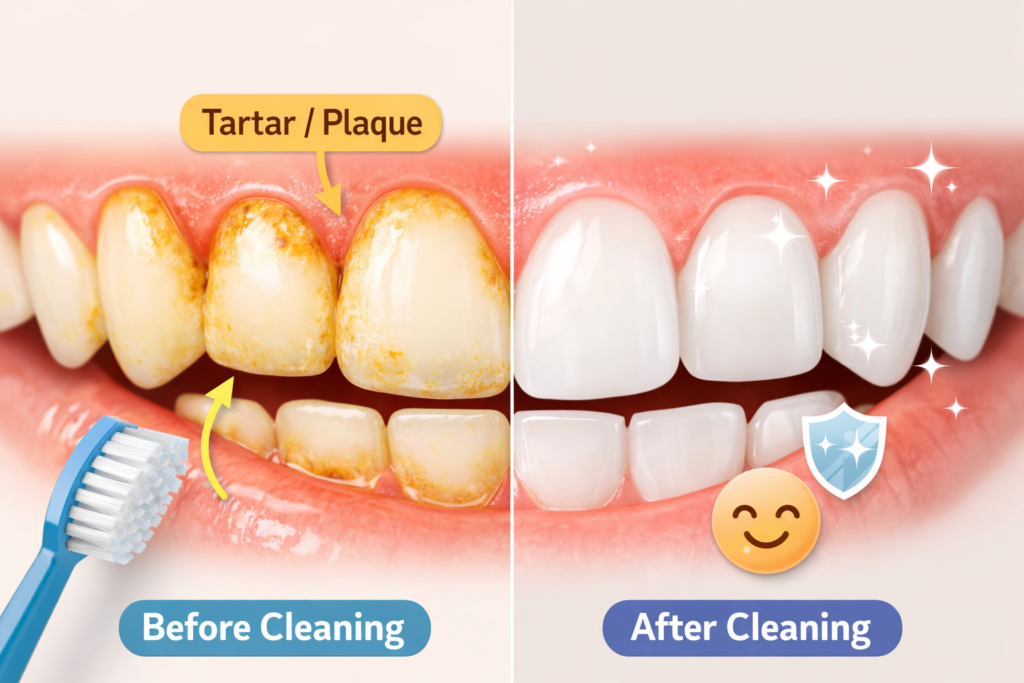
Plaque is a sticky layer of bacteria and leftover food that builds up on teeth after eating or drinking. When plaque hardens, it becomes tartar. Tartar often forms along the gum line and between teeth, making brushing alone less effective.
Signs of Tartar:
Yellow or brown deposits on teeth
Rough or hard surfaces near gums
Persistent bad breath
Swollen or bleeding gums
Once tartar hardens, it cannot be completely removed by brushing. That’s why prevention and early care are important.
Tartar forms for several reasons:
Poor oral hygiene: Skipping brushing or flossing
Plaque accumulation: Bacteria and leftover food
Diet: Sugary and starchy foods increase tartar risk
Smoking: Speeds up plaque and tartar formation
Infrequent dental visits: Regular professional cleaning helps prevent tartar
These methods are meant to help prevent tartar buildup and support oral health. They are safe when done properly.
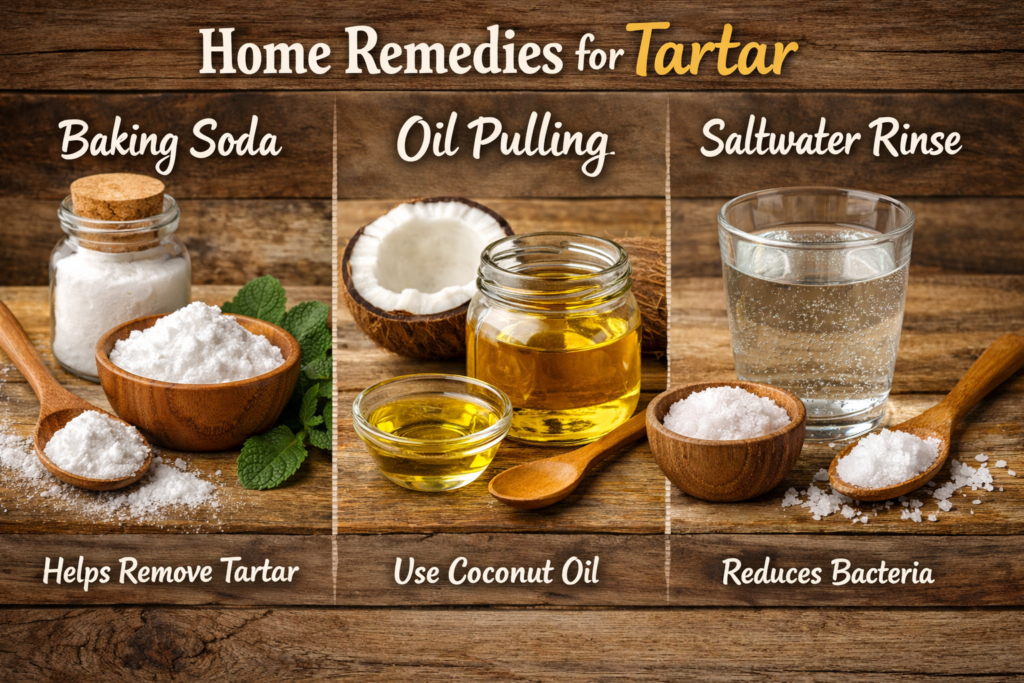
Baking soda is slightly abrasive, which helps remove plaque before it hardens.
How to use:
Mix 1 teaspoon of baking soda with a few drops of water to make a paste
Brush gently for 1–2 minutes
Rinse thoroughly
Limit to 1–2 times per week to avoid enamel wear.
Oil pulling helps reduce bacteria in the mouth, which can prevent tartar formation.
Method:
Take 1 tablespoon of coconut or sesame oil
Swish gently around your mouth for 10–15 minutes
Spit it out and rinse with water
This supports oral health over time but does not replace brushing.
Toothpaste containing fluoride or pyrophosphates can slow tartar formation.
Tips:
Brush twice daily
Angle the brush at 45° along the gumline
Replace your toothbrush every 3 months
Flossing removes plaque between teeth, where tartar often starts.
Tips:
Use gentle motions along the gumline
Reach both sides of every tooth
Floss at least once per day
Crunchy foods like apples, carrots, and celery act as natural abrasives.
Scrubs teeth while chewing
Stimulates saliva, which helps wash away food particles and bacteria
Saltwater helps reduce bacteria and soothe gums.
How to use:
Dissolve ½ teaspoon of salt in a glass of warm water
Rinse your mouth a few times per week
Apple cider vinegar may help control plaque, but must be diluted to protect tooth enamel.
Method:
Mix 1–2 teaspoons of vinegar with a glass of water
Swish for 30 seconds, then rinse thoroughly
Use only 1–2 times per week
Rinses containing chlorhexidine, cetylpyridinium chloride, or essential oils can limit bacterial growth and reduce plaque.
Scraping teeth with metal objects → may cause infection or gum injury
Strong acids (like lemon juice) → can erode enamel
Excessive hydrogen peroxide rinses → can irritate gums
Even with home care, professional dental cleaning is necessary for hardened tartar. Visit a dentist if you notice:
Yellow or brown crust near gums
Persistent bad breath
Swollen or bleeding gums
Tooth sensitivity
Early dental care prevents serious problems like gum disease and cavities.
Brush twice daily with fluoride toothpaste
Floss daily
Use tartar-control toothpaste or mouthwash
Limit sugary and starchy foods
Eat crunchy, fiber-rich foods
Visit the dentist regularly
Prevention is easier than removal. Consistent oral care keeps your teeth clean and healthy.
With consistent brushing, flossing, and safe home remedies, you can control tartar buildup. For the best results, combine home care with regular dental visits.
You can reduce mild tartar buildup at home using safe methods like:
Brushing twice daily with tartar-control toothpaste
Flossing every day to clean between teeth
Using baking soda paste occasionally
Oil pulling with coconut or sesame oil
Rinsing with saltwater or diluted vinegar
Note: Hardened tartar cannot be fully removed at home. Professional dental cleaning is the safest method.
Mild tartar may be managed at home, but fully hardened tartar requires professional removal.
Trying to scrape it yourself can damage gums or enamel.
Home care should focus on prevention and early reduction, not full removal.
If left untreated, tartar can lead to:
Gum disease (gingivitis or periodontitis)
Bad breath
Tooth decay and cavities
Tooth sensitivity or loss
Early removal and prevention are crucial for long-term oral health.
Yes. Tartar is rough and porous, which:
Harbors bacteria that irritate gums
Weakens enamel over time
Can cause cavities, inflammation, and gum disease
Controlling tartar early helps protect your teeth and gums.
Plaque: Soft, sticky film of bacteria that forms on teeth daily; can be removed by brushing and flossing.
Tartar: Hardened plaque that sticks to teeth and cannot be removed by brushing alone; usually requires professional cleaning.
Think of plaque as the “early stage” and tartar as the “advanced stage” that can cause dental problems.