
Teeth cleaning is one of the most common dental procedures, yet many people still ask the same question before booking an appointment: Is teeth cleaning painful?
The short answer is no teeth cleaning is usually not painful, and for most patients, it’s a comfortable and quick experience.
In this expert-backed guide, we’ll explain what teeth cleaning feels like, when mild discomfort can occur, how dentists minimize pain, and why avoiding cleanings can actually lead to more pain in the future.
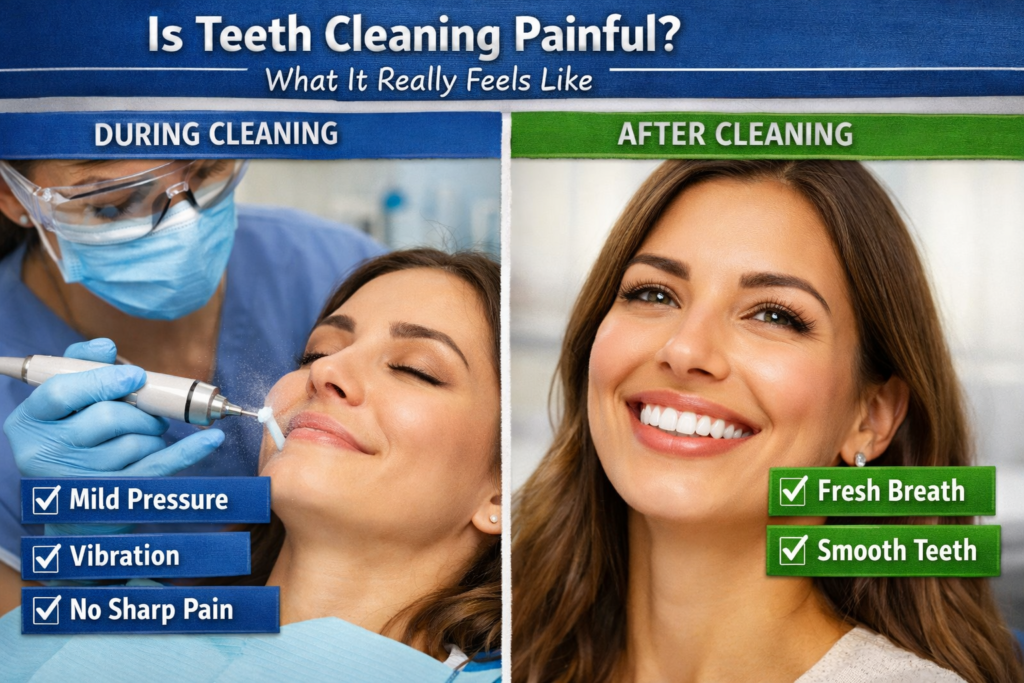
Professional teeth cleaning (also called dental prophylaxis) is a preventive dental procedure performed by a dentist or dental hygienist to remove:
Plaque (soft bacterial buildup)
Tartar (hardened plaque)
Surface stains
Bacteria below the gumline
Even if you brush twice daily, plaque can still build up in tight or hidden areas—making professional cleaning essential for long-term oral health.
Understanding the process helps reduce anxiety and fear of pain.
The dentist or hygienist examines your teeth and gums for cavities, inflammation, or sensitivity before starting.
Special tools are used to remove plaque and tartar from teeth and along the gumline.
Manual scaler – hand-held instrument
Ultrasonic scaler – uses vibrations and water spray
This step may feel slightly uncomfortable, but it should not be painful.
A rotating brush with a mild abrasive paste smooths the teeth and removes stains.
This step is completely painless and often feels refreshing.
Removes debris between teeth and checks gum health.
A fluoride treatment may be applied to strengthen enamel and prevent cavities.
For most people, teeth cleaning is not painful. However, sensations vary depending on oral health.
What You Might Feel
Teeth cleaning may feel mildly uncomfortable if you have:
Heavy tartar buildup
Gum disease (gingivitis or periodontitis)
Sensitive teeth or exposed roots
Long gaps between dental visits
Even in these cases, discomfort is temporary and manageable.
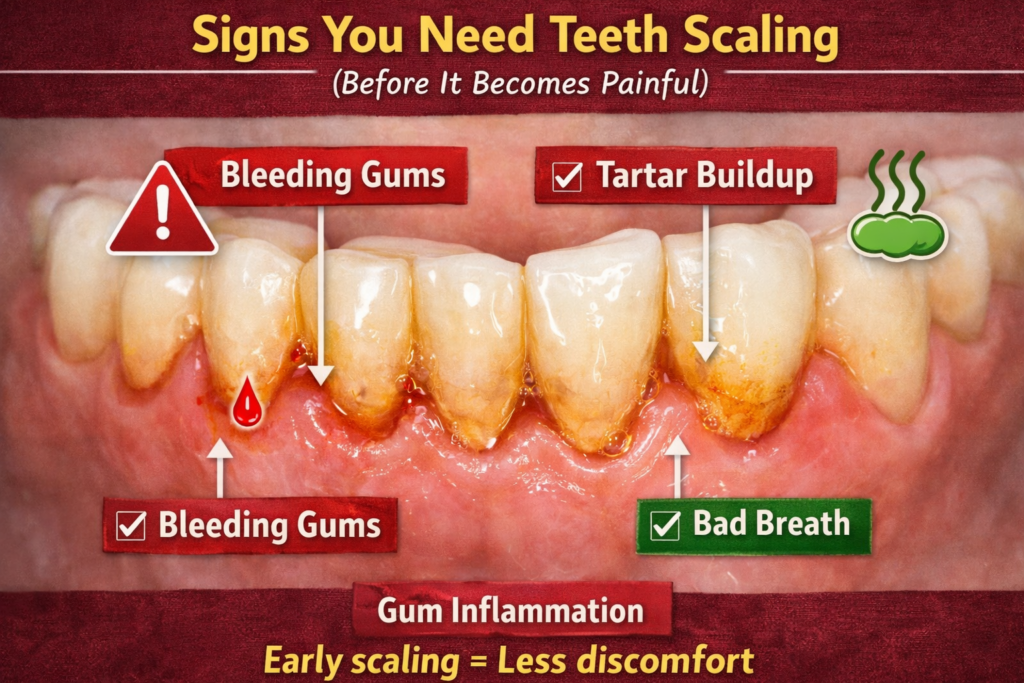
Yes, mild bleeding can occur, especially if gums are inflamed.
This is not a sign to avoid cleaning. In fact, regular cleanings help gums heal and stop bleeding over time.
If you have sensitive teeth, you may experience short-term sensitivity during scaling or polishing. Dentists can easily manage this by:
Using gentler tools
Applying numbing gel
Adjusting water temperature
Recommending desensitizing toothpaste
Sensitivity usually disappears within 24–48 hours.
Here’s how you can ensure a pain-free experience:
Tell your dentist about sensitivity or anxiety
Maintain regular brushing & flossing
Use desensitizing toothpaste before appointments
Avoid skipping cleanings
Practice deep breathing during the procedure
If you recently had a dental procedure like wisdom tooth removal, following the dos and don’ts after wisdom tooth extraction helps protect gums and teeth during cleaning.
Most people should get a professional cleaning every 6 months.
You may need more frequent cleanings if you have:
Gum disease
Diabetes
Heavy plaque buildup
Smoking habits
Myth: Teeth cleaning damages enamel
Fact: Professional cleaning is completely safe for enamel
Myth: Teeth cleaning is always painful
Fact: Most patients feel little to no discomfort
Myth: Bleeding gums mean I should avoid cleaning
Fact: Bleeding gums actually need cleaning
Even if you feel minor discomfort, the benefits are huge:
Prevents cavities
Stops gum disease
Improves breath
Brightens smile
Prevents expensive treatments later, such as root canal treatment, which is often required if infections progress untreated.
Skipping cleanings often leads to painful dental problems, including severe decay that may require tooth extraction.
Teeth cleaning is not painful for most people.
Any mild discomfort is temporary—and far better than dealing with cavities, gum disease, or tooth loss later.
Regular professional cleanings are one of the simplest, safest, and most effective ways to protect your smile.
A routine dental cleaning should not be painful. Most people feel mild pressure, vibration, or slight discomfort, especially near the gum line — but true pain is not normal.
If your gums are inflamed or there is heavy tartar buildup, you may feel temporary sensitivity, not sharp pain. Dentists can always adjust pressure or use numbing gel if needed.
Key takeaway:
Mild discomfort ≠ pain. Pain usually means gum disease or sensitivity, not the cleaning itself.
It’s normal for teeth or gums to feel slightly sore or sensitive for 24–48 hours after a cleaning, especially if:
You had a lot of plaque or tartar
Your gums were bleeding or inflamed
You already have tooth sensitivity
This discomfort is temporary and usually settles within a day or two. Using a soft toothbrush and desensitizing toothpaste helps.
Important: Pain that lasts more than 3 days is not normal and should be checked by a dentist.
Yes — professional teeth cleaning is essential, even if you brush and floss daily.
Brushing cannot remove hardened tartar, which leads to:
Gum bleeding
Bad breath
Gum disease (gingivitis → periodontitis)
Tooth loss over time
Skipping cleanings may avoid short-term discomfort, but it increases long-term pain, infection, and treatment costs.
Short discomfort now prevents serious dental problems later.
You may need teeth scaling if you notice:
Bleeding gums while brushing or flossing
Persistent bad breath
Yellow or brown tartar near the gum line
Swollen, tender, or receding gums
Teeth feeling rough or unclean even after brushing
These are signs that plaque has hardened into tartar, which cannot be removed at home.
Early scaling is simpler, less painful, and safer than delayed treatment.
No teeth do NOT fall out because of deep cleaning.
This is a common myth. Deep cleaning (scaling and root planing) removes infection, not teeth.
If teeth feel loose afterward, it’s because:
Gum disease had already destroyed bone support
Swelling reduced, revealing existing damage
Deep cleaning helps save teeth, not loosen them.