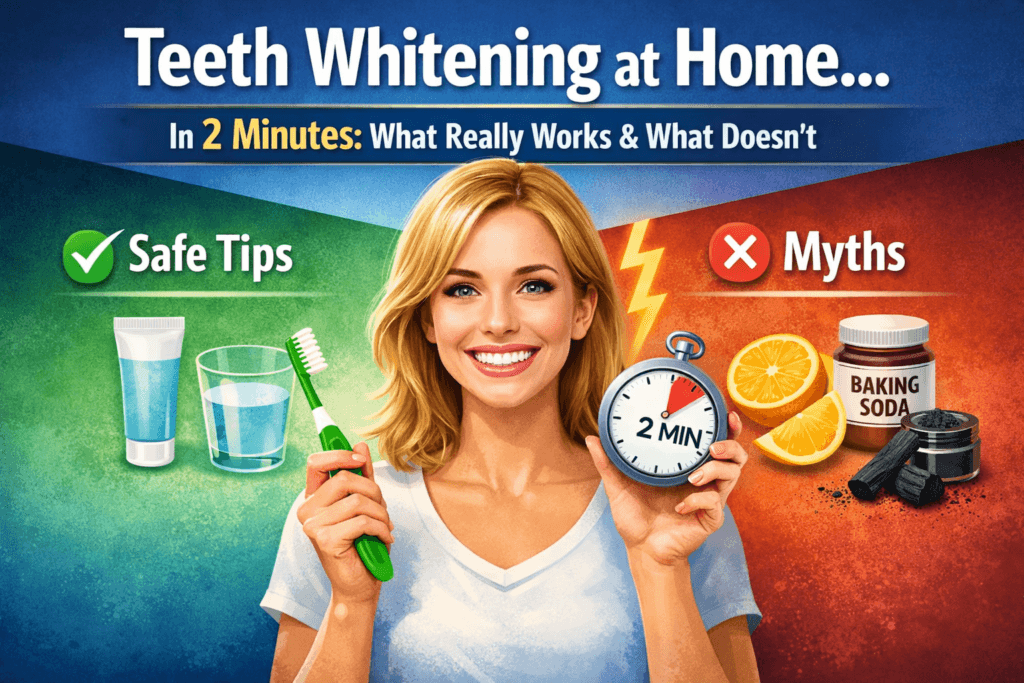
Teeth Whitening at Home in 2 Minutes: What Really Works & What Doesn’t
Everyone wants a brighter smile, and it’s common to search for quick teeth whitening at home especially solutions that promise results in just 2 minutes. While no safe method can permanently whiten teeth in such a short time, some simple steps can temporarily improve tooth brightness by removing surface stains.
In this blog, we explain what actually works, what doesn’t, and how to whiten your teeth safely without damaging your enamel.
What Does “2-Minute Teeth Whitening” Really Mean?
Let’s be clear and honest.
Teeth whitening in 2 minutes does NOT mean:
What it CAN mean:
Removing surface stains from coffee, tea, or smoking
Making teeth look cleaner and slightly brighter
Improving appearance temporarily
This distinction is important for your dental health.
What Really Works at Home (Safe & Quick Tips)
These methods are dentist-approved and safe when done correctly. Results are temporary but can help your smile look fresher.
1. Brush Properly With Whitening Toothpaste
Use a fluoride-based whitening toothpaste
Brush gently for 2 minutes
Helps remove surface stains, not deep discoloration
2. Rinse After Tea, Coffee, or Colored Drinks
3. Gentle Wipe for Instant Clean Look
Lightly wipe teeth with a clean, damp cloth
Can remove surface residue before events or meetings
Note: These methods do not bleach teeth they only clean the surface.
What DOESN’T Work (And Can Damage Your Teeth)
Many viral “2-minute hacks” on social media are unsafe and should be avoided.
– Lemon or vinegar
– Baking soda daily use
– Activated charcoal frequently
– Salt rubbing
– DIY chemical mixtures
Why to avoid them:
If enamel is damaged, whitening becomes harder not easier.
Why Teeth Look Yellow Even After Cleaning
Tooth color depends on:
Surface cleaning won’t change internal tooth color only professional whitening can.
How Long Does Recovery Take After a Root Canal?
Mild soreness for 1–3 days
Normal eating resumes quickly
Full strength after crown placement
Long-term results can last 10–15+ years
What Actually Works for Long-Term Whitening
If you want real, noticeable whitening, these are the effective options:
Professional In-Clinic Teeth Whitening
Dentist-Supervised Home Whitening Kits
These methods change the tooth shade safely, unlike quick DIY tricks.
When Should You Consult a Dentist?
You should see a dentist before whitening if you have:
A dental check ensures whitening is safe and effective for you.
Final Thoughts
Quick at-home methods can help your teeth look cleaner and slightly brighter, but true whitening takes professional care. Avoid shortcuts that harm your enamel and always choose safe, dentist-recommended options.
For a brighter, confident smile, professional teeth whitening is the most reliable solution.