After a tooth extraction, your mouth needs time to heal and recover properly. The extraction site forms a protective blood clot that helps the surrounding gum tissue and bone repair themselves. During this healing phase, eating the right foods becomes extremely important.
Consuming hard, crunchy, or sticky foods too soon can disturb the healing area, cause bleeding, or even dislodge the blood clot. This can lead to a painful dental complication called dry socket. That is why dentists strongly recommend following a soft diet after tooth extraction for the first few days.
If you’re wondering what to eat after tooth extraction, choosing foods that are soft, nutritious, and easy to swallow can make your recovery much smoother. In this guide, we will cover 50 soft foods to eat after tooth extraction, along with helpful recovery tips and foods you should avoid.
Why Soft Foods Are Important After Tooth Extraction
After a tooth is removed, the gum tissue around the extraction site becomes sensitive and vulnerable. The body begins forming a clot over the area to protect the bone and nerves underneath. If this clot becomes dislodged, it can cause significant discomfort and delay healing.
Eating soft foods after tooth extraction helps protect the area and reduces pressure on the gums.
Benefits of eating soft foods include:
Prevents irritation of the extraction site
Helps protect the blood clot from dislodging
Makes chewing easier and less painful
Supports faster healing and recovery
Provides essential nutrients during recovery
Dentists usually recommend eating soft foods for at least 3–5 days, although the exact duration depends on the type of extraction and individual healing speed.
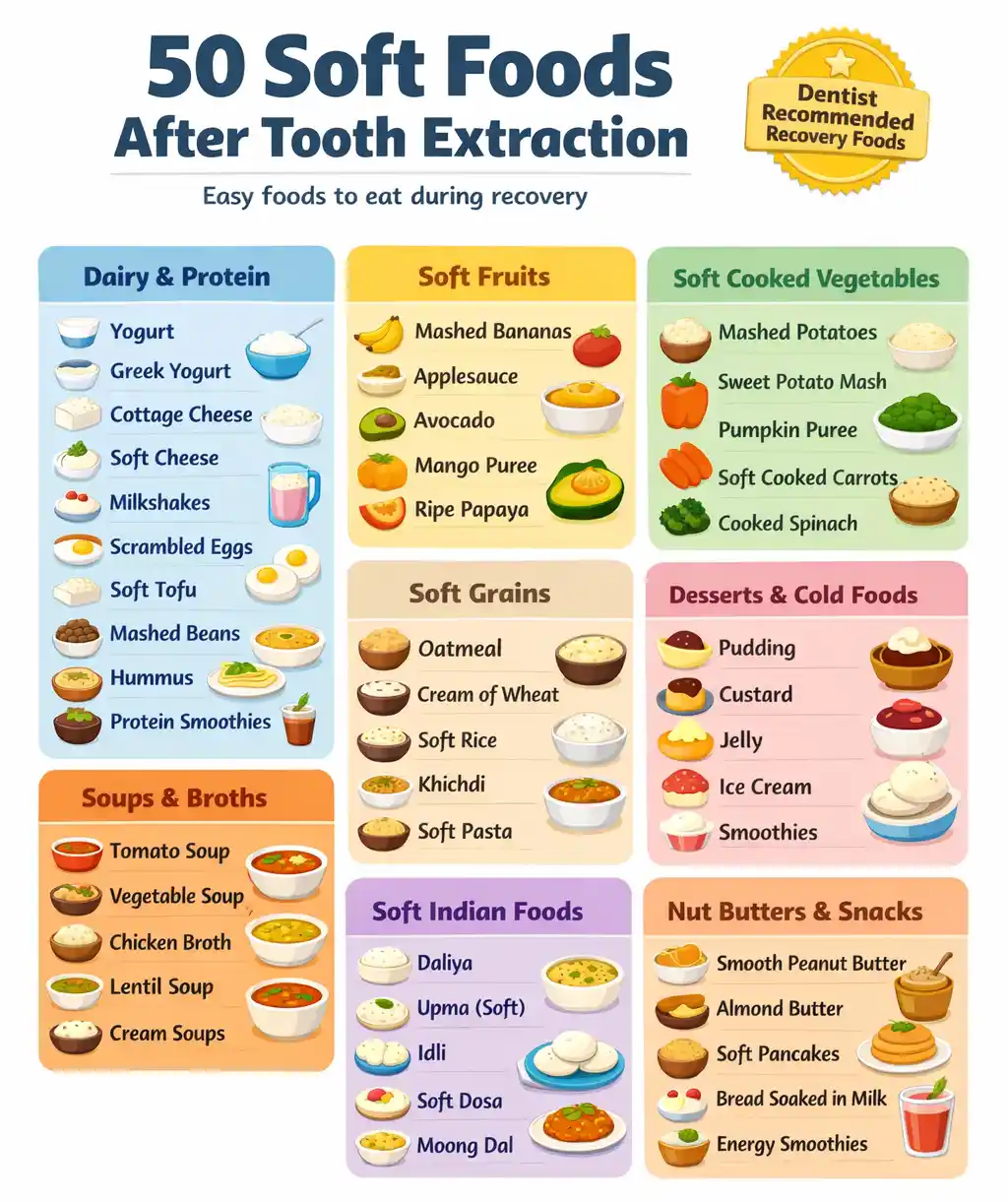
50 Soft Foods to Eat After Tooth Extraction
Below is a comprehensive list of safe foods after tooth extraction that are gentle on the mouth and easy to consume.
Dairy-Based Soft Foods
Dairy products are excellent choices because they are soft, nutritious, and rich in calcium.
Yogurt
Greek yogurt
Cottage cheese
Soft cheese
Milkshakes
These foods help provide protein and calcium, both of which are important for tissue repair and bone health.
Protein-Rich Soft Foods
Protein plays an essential role in healing and tissue regeneration.
Scrambled eggs
Soft tofu
Mashed beans
Hummus
Protein smoothies
Soft protein foods are ideal because they provide nutrients without requiring heavy chewing.
Soft Fruits
Many fruits become soft when mashed or pureed, making them safe to eat during recovery.
Mashed bananas
Applesauce
Avocado
Mango puree
Ripe papaya
These fruits provide important vitamins such as Vitamin C, which helps promote healing.
Soft Cooked Vegetables
Well-cooked vegetables become soft and easy to eat.
Mashed potatoes
Sweet potato mash
Pumpkin puree
Soft cooked carrots
Cooked spinach
These vegetables provide fiber, vitamins, and minerals that support recovery.
Soups and Broths
Soups are among the most recommended foods after dental procedures.
Tomato soup
Vegetable soup
Chicken broth
Lentil soup
Cream soups
Always allow soups to cool slightly before eating, as very hot foods may irritate the healing gums.
Soft Grains
Soft grains provide energy while being easy to chew.
Oatmeal
Cream of wheat
Soft rice
Khichdi
Soft pasta
These foods are filling and can help maintain energy levels while your body heals.
Soft Desserts and Snacks
Some desserts can also help soothe the mouth after dental procedures.
Pudding
Custard
Jelly
Ice cream
Smoothies
Cold desserts can help reduce swelling and provide comfort after extraction.
Soft Indian Food Options
Indian diets also include many naturally soft foods suitable for recovery.
Daliya
Upma (soft consistency)
Idli
Soft dosa
Moong dal
These foods are commonly recommended by dentists because they are light, nutritious, and easy to digest.
Energy-Rich Soft Foods
Your body needs energy to heal properly.
Smooth peanut butter
Almond butter
Soft pancakes
Bread soaked in milk
Energy smoothies
These foods help provide calories and nutrients needed during recovery.
Hydrating Foods and Drinks
Hydration is extremely important after dental procedures.
Coconut water
Fruit smoothies
Buttermilk
Milk
Soft fruit shakes
Staying hydrated helps your body recover faster and prevents dryness in the mouth.
Foods to Avoid After Tooth Extraction
Certain foods can interfere with healing and should be avoided for several days.
Avoid foods such as:
Hard nuts and seeds
Chips and crunchy snacks
Spicy foods
Sticky candies
Alcohol
Carbonated drinks
Very hot foods
These foods can irritate the gums or disturb the blood clot protecting the extraction site.
Tips for Faster Recovery After Tooth Extraction
Following proper aftercare instructions can significantly improve healing time.
Important recovery tips include:
Eat only soft foods for the first few days
Avoid chewing on the side where the tooth was removed
Do not use straws, as suction can dislodge the clot
Avoid smoking for at least 48 hours
Maintain gentle oral hygiene
If you are planning dental treatment, many patients also check the tooth extraction cost in Mumbai before undergoing the procedure to understand the expected expenses.
Recovering After a Tooth Extraction?
Following the right diet and dental care routine can make recovery easier and prevent complications. If you are experiencing tooth pain or need professional dental advice, consulting an experienced Dental Clinic in Bandra can help ensure safe and comfortable treatment.
Frequently Asked Questions