Losing a single tooth can affect much more than your smile. It may change the way you chew, speak, and even impact your confidence over time. A dental implant is considered one of the most reliable and long-lasting solutions for replacing one missing tooth because it closely mimics a natural tooth.
One of the most common questions patients ask is: What is the single tooth implant cost in India?
In India, the average single tooth implant cost usually ranges between ₹20,000 and ₹60,000 or more, depending on the implant brand, crown material, clinic location, and whether additional procedures are required.
If you are searching for the cost of replacing one missing tooth, this guide explains everything in simple language — including pricing, types of crowns, Mumbai costs, treatment steps, recovery, and whether implants are truly worth the investment.
A single tooth dental implant is an artificial tooth replacement used when one natural tooth is missing or needs to be extracted.
Unlike removable dentures or dental bridges, an implant replaces the tooth root as well as the visible tooth.
A complete implant tooth replacement usually has 3 parts:
1. Dental Implant Fixture
This is a Titanium screw placed inside the jawbone. It acts like an artificial tooth root.
2. Abutment
A small connector attached to the implant that supports the crown.
3. Dental Crown
The visible tooth-like cap is placed on top of the implant.
Once healed, the implant looks and functions very similar to a natural tooth.
Why Do People Choose Dental Implants?
Patients often choose implants because they:
Feel stable compared to removable options
You can also read our detailed guide on Dental Implant Cost in India for complete full-mouth and multiple implant pricing information.
The single tooth implant cost in India depends on multiple factors including implant brand, crown quality, dentist expertise, and city location.
Treatment Component | Approximate Cost |
Basic Titanium Implant | ₹20,000 – ₹35,000 |
Premium Implant Brand | ₹40,000 – ₹70,000 |
Zirconia Crown Implant Cost | ₹10,000 – ₹25,000 |
Metal Crown | ₹3,000 – ₹8,000 |
Porcelain Fused to Metal Crown | ₹5,000 – ₹12,000 |
CBCT Scan | ₹1,500 – ₹5,000 |
Bone Grafting (if needed) | ₹5,000 – ₹25,000 |
City | Approximate Cost Range |
Mumbai | ₹30,000 – ₹65,000 |
Delhi | ₹28,000 – ₹60,000 |
Bangalore | ₹30,000 – ₹70,000 |
Pune | ₹25,000 – ₹55,000 |
Hyderabad | ₹25,000 – ₹60,000 |
Chennai | ₹25,000 – ₹58,000 |
Ahmedabad | ₹22,000 – ₹50,000 |
The dental implant cost in Mumbai is usually slightly higher than many other cities because clinics often use advanced technology, imported implant systems, and specialized implant dentists.
In Mumbai, the average one tooth implant cost generally falls between:
₹30,000 to ₹65,000+
Premium clinics in areas like South Mumbai, Bandra, Andheri, Powai, and Juhu may charge higher fees due to:
Not all dental implants cost the same. The final price depends on several clinical and material-related factors.
1. Implant Brand
Imported implant systems usually cost more than local systems.
Common Premium Implant Brands
Straumann
Nobel Biocare
Osstem
Dentium
BioHorizons
Premium implants may offer:
Better long-term studies
Faster healing
Improved surface technology
Higher success rates
2. Crown Material
The crown placed over the implant significantly affects the final cost.
Crown options include:
Zirconia crowns
Porcelain fused to metal crowns
Metal crowns
A zirconia crown implant cost is usually higher because zirconia offers better aesthetics and durability.
3. Bone Grafting
Some patients lose jawbone after tooth extraction. In such cases, bone grafting may be needed before implant placement.
This can increase treatment cost.
4. CBCT Scan and Digital Planning
Modern implant treatment often uses:
3D scans
Digital surgical guides
Computer-assisted planning
These improve precision and safety but may add to the total expense.
5. Dentist Experience
An experienced implant dentist or oral surgeon may charge higher professional fees.
However, expertise often reduces complications and improves long-term success.
6. Clinic Location
Clinics in metro cities like Mumbai usually have:
Higher infrastructure costs
Advanced equipment
Specialized staff
This affects overall pricing.
The crown is the visible part of the implant tooth replacement.
Choosing the right crown affects:
Crown Type | Advantages | Disadvantages | Approximate Cost |
Zirconia Crown | Highly aesthetic, metal-free, durable | Higher cost | ₹10,000 – ₹25,000 |
Porcelain Fused to Metal (PFM) | Strong and affordable | May show metal edge over time | ₹5,000 – ₹12,000 |
Metal Crown | Durable and economical | Poor aesthetics | ₹3,000 – ₹8,000 |
You can explore more options in our guide on Types of Crowns for Teeth.
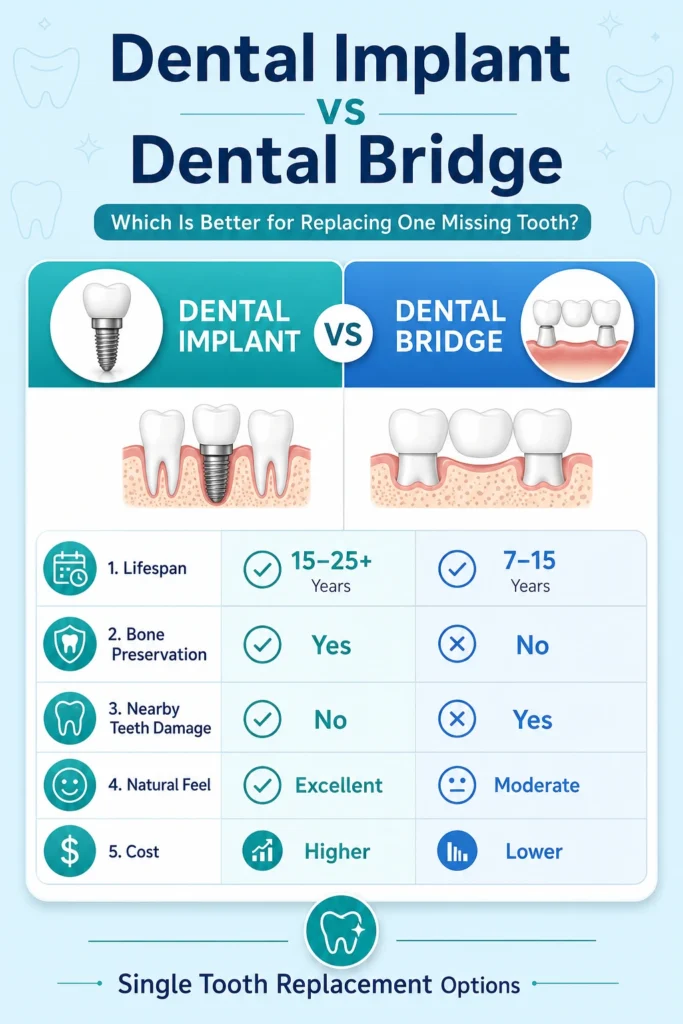
Many patients initially feel that implants are expensive compared to bridges or dentures. However, implants often provide better long-term value.
Benefits of Dental Implants
Although the initial single dental implant price may seem high, many patients find the durability and comfort worthwhile.
Treatment | Best For | Average Cost | Lifespan | Affects Adjacent Teeth |
Dental Implant | Missing tooth | ₹20,000 – ₹60,000+ | 15–25+ years | No |
Dental Bridge | Missing tooth | ₹8,000 – ₹25,000 | 7–15 years | Yes |
Root Canal + Crown | Infected existing tooth | ₹5,000 – ₹20,000 | 10–15 years | Saves natural tooth |
If the natural tooth can still be saved, dentists may recommend root canal treatment first. Read more about Root Canal Treatment Cost in India to compare options.
This is one of the biggest concerns patients have.
The good news is that dental implant surgery is usually done under local anesthesia, so patients typically feel pressure rather than pain during the procedure.
During the Procedure
After the Procedure
Mild discomfort, swelling, or soreness may occur for a few days.
These symptoms are usually manageable with:
Most patients return to normal activities within 1–3 days.
You can also read our detailed article: Are Dental Implants Painful?
Implant Fixture | 15–25+ years |
Crown | 10–15 years |
Before Implant Surgery
Stick to soft foods for a few days.
Avoid Smoking: Smoking can delay healing and increase implant failure risk.
Brush Carefully: Maintain excellent oral hygiene around the implant.
Attend Follow-Up Visits: Regular check-ups help monitor healing.
Professional Cleaning: Routine dental cleaning helps maintain implants long term.
You may also explore Before and After Dental Implants to understand the transformation process better.
Most healthy adults can get implants.
Ideal Candidates Usually Have:
Every smile is different. Get a personalised estimate based on your dental condition, implant type, and crown choice.
Talk to our implant experts today and discover affordable, long-lasting tooth replacement solutions.
A single tooth implant procedure is usually less painful than many people expect. The dentist uses local anesthesia, so you should not feel pain during the procedure. Mild swelling, soreness, or discomfort may occur for a few days afterward, but it can typically be managed with prescribed or over-the-counter pain medication.
Yes, a single dental implant is one of the most common solutions for replacing one missing tooth. The implant acts like an artificial tooth root and supports a custom-made crown that blends naturally with your existing teeth.
Absolutely. A single missing tooth can be replaced with a dental implant, dental bridge, or removable partial denture. Dental implants are often preferred because they look natural, function like real teeth, and help preserve jawbone health.
Yes, you can usually get a dental implant even after 5 years or longer. However, if bone loss has occurred over time, you may need a bone graft before implant placement. A dental examination and X-rays can determine the best treatment option for your situation.
For many patients, a single tooth implant is worth the investment because it offers long-term durability, natural appearance, improved chewing ability, and helps prevent bone loss. With proper care, dental implants can last for many years or even a lifetime.
Some people may not be ideal candidates for dental implants, including those with uncontrolled diabetes, severe gum disease, heavy smoking habits, significant bone loss, or certain medical conditions that affect healing. A dentist or implant specialist can evaluate your oral and overall health to determine eligibility.