
Sensitive teeth can make everyday activities like drinking cold water, eating sweets, or brushing your teeth uncomfortable and painful. If you experience a sharp, sudden pain in your teeth, it is often a sign of tooth sensitivity.
The good news is that in many cases, home remedies for sensitive teeth can help reduce discomfort and provide relief. In this blog, we’ll explain how to reduce tooth pain naturally, share effective home remedies for tooth pain, and discuss when professional tooth sensitivity treatment is needed.
Sensitive teeth occur when the protective enamel layer of the tooth becomes thin or damaged, exposing the inner layer called dentin. Dentin contains tiny tubes that connect to the tooth’s nerve, which is why you may feel pain when consuming hot, cold, sweet, or acidic foods.
Understanding the cause helps in choosing the right remedy for relief.
If your sensitivity is mild or occasional, these home remedies for sensitive teeth can help manage pain and discomfort naturally.
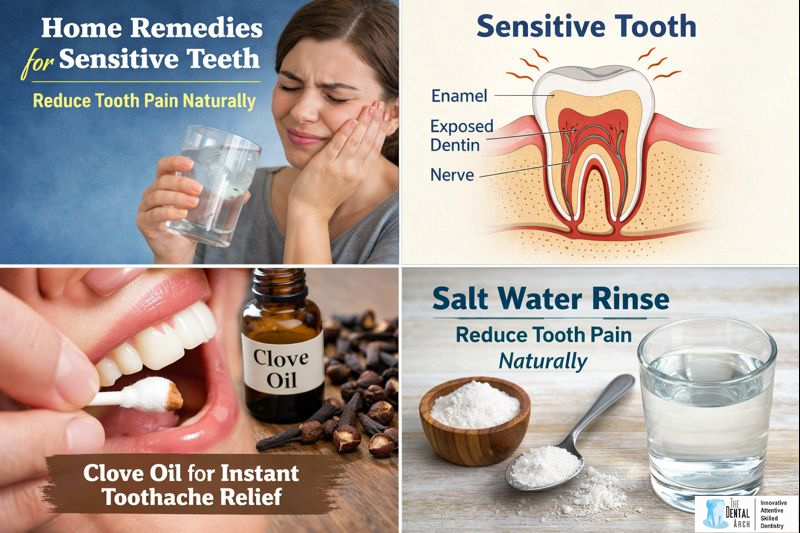
Salt water is a natural disinfectant that helps reduce inflammation and bacteria in the mouth.
How to use:
This simple remedy can help reduce tooth pain and soothe irritated gums.
Clove oil has natural pain-relieving and antibacterial properties, making it one of the most effective remedies for tooth pain.
How to use:
This method provides instant toothache relief, especially during sudden pain.
Specially formulated toothpaste for sensitive teeth helps block pain signals from reaching the nerves.
Tips for best results:
This is one of the safest at-home options for tooth sensitivity treatment.
Honey has antibacterial and healing properties that help soothe sensitive teeth and gums.
How to use:
This remedy supports oral health while easing tooth sensitivity.
Green tea is rich in antioxidants and helps reduce inflammation.
How to use:
Regular use can strengthen teeth and reduce sensitivity over time.
When sensitivity strikes suddenly, these tips can help with instant toothache relief:
These methods provide temporary relief until the underlying cause is treated.
Certain foods can worsen tooth sensitivity. Try to limit:
Instead, choose tooth-friendly foods like dairy products, leafy greens, nuts, and plenty of water.
While home remedies for tooth pain are helpful, they may not solve deeper dental issues.
You should consult a dentist if:
Professional tooth sensitivity treatment may include fluoride application, bonding, gum treatment, or cavity care.
Preventive care is essential for long-term relief.
Follow these tips:
These habits help protect enamel and reduce the risk of sensitivity.
Sensitive teeth can be uncomfortable, but they are often manageable with the right approach. These home remedies for sensitive teeth offer safe and natural ways to ease discomfort and reduce tooth pain. From salt water rinses to clove oil and desensitizing toothpaste, small changes can make a big difference.
If sensitivity persists, professional dental care is essential to prevent further damage and ensure long-term oral health.
Clove oil and salt water rinses are among the fastest home remedies for sensitive teeth. They help reduce inflammation and provide quick pain relief.
Mild tooth sensitivity may improve with proper oral care and home remedies. However, persistent sensitivity usually needs professional tooth sensitivity treatment.
You can reduce tooth pain naturally by using desensitizing toothpaste, avoiding acidic foods, rinsing with salt water, and maintaining good oral hygiene.
Tooth sensitivity can be caused by enamel wear or gum recession, but it may also indicate cavities or gum disease. If pain continues, dental evaluation is recommended.
You should see a dentist if tooth pain lasts more than a week, becomes severe, or affects your daily activities despite using home remedies.
Yes, most home remedies for sensitive teeth are safe when used correctly. Remedies like salt water rinses, clove oil, and desensitizing toothpaste can help reduce tooth pain. However, if sensitivity is severe or long-lasting, professional tooth sensitivity treatment is recommended.