
White teeth are often associated with a bright smile and confidence. While professional treatments can be expensive, many people look for natural ways to whiten teeth at home.
This article explains safe, effective methods, what actually works, what to avoid, and how to use these remedies without harming your enamel.
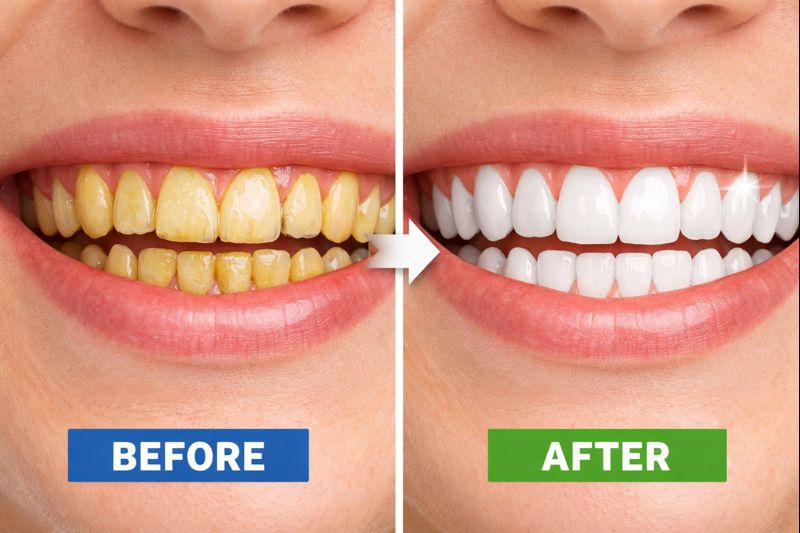
Understanding the cause helps in choosing the right whitening method. Common reasons include:
Tea, coffee, or colored drinks
Tobacco use or smoking
Poor oral hygiene
Plaque and tartar buildup
Aging (enamel naturally thins)
Certain medications
Natural remedies mainly work for surface stains, not deep discoloration.
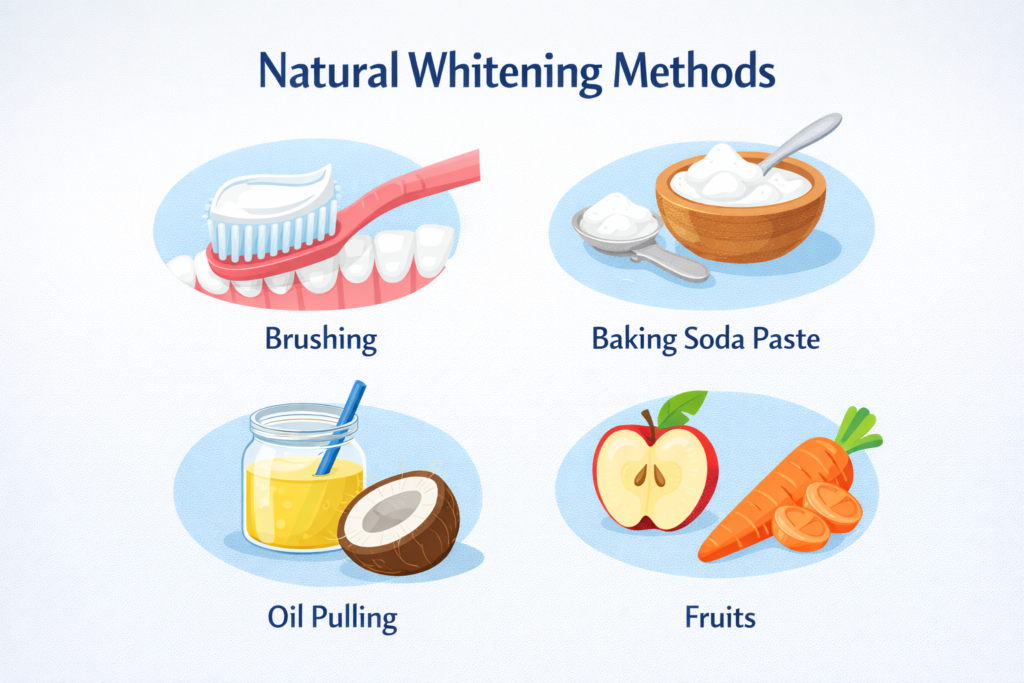
Brushing is the foundation of any whitening method.
Brush at least twice a day using a soft-bristled toothbrush
Rinse after meals with tea, coffee, or colored foods
Avoid brushing immediately after acidic foods or drinks to prevent enamel erosion
Using whitening toothpaste occasionally can help remove surface stains, but it does not change natural tooth color.
Oil pulling is a traditional Indian remedy that may help reduce plaque and improve oral hygiene.
How to do it:
Take 1 tablespoon of coconut oil, mustard oil, or sesame oil
Swish in your mouth for 10–15 minutes
Spit out, rinse, and brush afterward
Helps reduce bacteria
Results in teeth whitening are gradual and may vary
Baking soda has mild abrasive properties that help remove surface stains.
Usage:
Mix ½ teaspoon baking soda with water
Brush gently for 1–2 minutes
Use once or twice a week only
Overuse can damage enamel and increase sensitivity.
Hydrogen peroxide is a natural bleaching agent. It’s also found in professional whitening products.
Safe home use:
Use 3% hydrogen peroxide
Dilute with equal water
Swish for 30–60 seconds, then rinse thoroughly
Do not swallow
Limit use to 2–3 times per week
Mustard oil is widely used in India for oral care and may help maintain healthy gums while gradually improving tooth appearance.
How to use:
Massage a few drops on your teeth and gums
Rinse after 2–3 minutes
Can be used daily
Crunchy fruits and vegetables help mechanically remove plaque while chewing.
Recommended foods:
Apples, carrots, celery
Pineapple (contains bromelain enzyme)
Strawberries (contain malic acid)
These may help reduce surface stains, but do not replace regular brushing.
Some popular DIY remedies can damage enamel:
Lemon or citrus peel rubbing
Undiluted apple cider vinegar
Daily charcoal use
Salt scrubbing
These can permanently weaken tooth enamel.
Mild surface stains: 2–4 weeks
Moderate stains: 1–2 months
Deep discoloration: natural remedies may not be effective
If natural methods do not work, professional options may be required:
Dental cleaning (scaling & polishing)
Professional teeth whitening
Veneers (for severe discoloration)
Consult a dentist if you have sensitive teeth, enamel erosion, or deep staining.
Natural teeth whitening at home can improve the appearance of your teeth by reducing surface stains. Safe methods include proper brushing, oil pulling, baking soda, hydrogen peroxide (diluted), mustard oil, and crunchy fruits and vegetables.
Always avoid harsh DIY remedies, and consult a dentist if stains persist or teeth are sensitive.
You can reduce yellowing with safe home remedies:
Brush twice daily with fluoride toothpaste
Use baking soda occasionally to remove surface stains
Try oil pulling with coconut or mustard oil
Eat crunchy fruits and vegetables like apples, carrots, and celery
Avoid acidic foods immediately before brushing
Results are gradual and mainly work on surface stains, not deep discoloration.
Teeth can become yellow due to:
Stains from tea, coffee, or colored drinks
Tobacco use or smoking
Plaque and tartar buildup
Natural enamel thinning with age
Certain medications
Surface stains can be improved naturally, but deep internal stains may require professional treatment.
Yes, surface stains can often be removed naturally or with safe dental treatments.
However, intrinsic stains caused by enamel wear or aging usually require professional whitening, dental cleaning, or veneers.
For quicker results on surface stains:
Brush after meals with a soft toothbrush
Use a safe baking soda and water paste 1–2 times per week
Oil pulling for 10–15 minutes daily
Avoid smoking and staining foods
Remember: natural methods cannot produce overnight results
The safest options include:
Maintaining good oral hygiene (brushing + flossing)
Using whitening toothpaste or diluted hydrogen peroxide occasionally
Oil pulling with coconut or mustard oil
Professional teeth cleaning or dentist-approved whitening if stains persist
Avoid harsh DIY methods like lemon peels, undiluted vinegar, or daily charcoal use.