
A root canal treatment can completely transform a damaged or infected tooth. Many patients worry about pain, appearance, and results before the procedure. Understanding root canal before and after results helps clear myths and sets the right expectations.
This guide explains what your tooth looks and feels like before and after a root canal, including special cases like a dead tooth and front tooth root canal treatment.
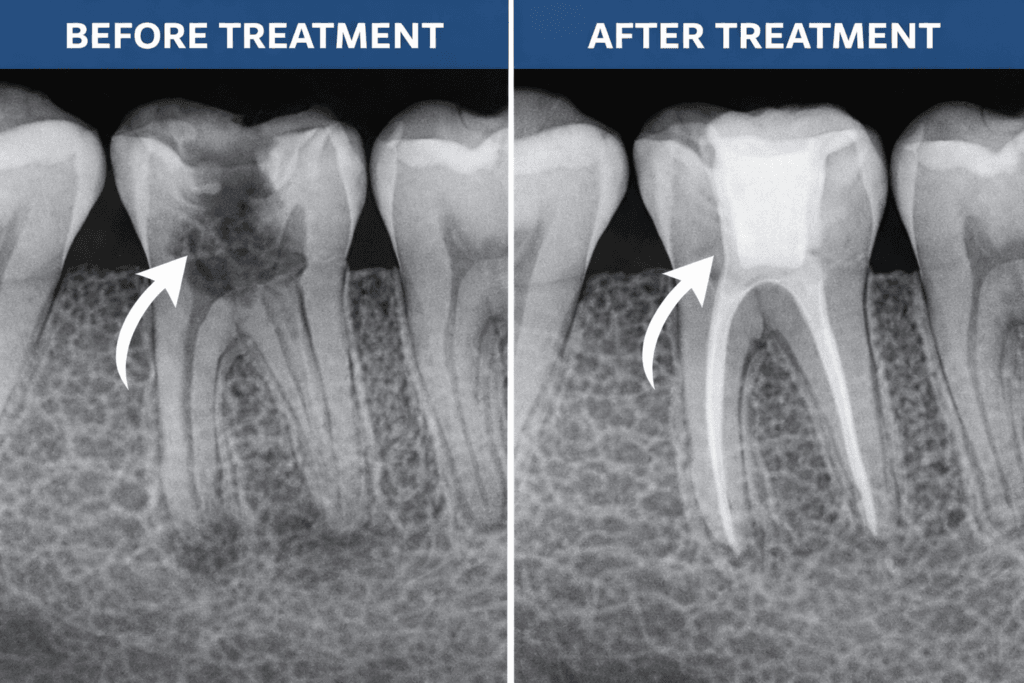
A root canal is a dental procedure used to remove infected or dead pulp from inside a tooth. After cleaning and disinfecting the canal, the dentist seals it to prevent further infection and restores the tooth with a filling or crown.
Before a root canal, patients often notice:
Severe or persistent tooth pain
Sensitivity to hot or cold
Swelling in the gums
Tooth discoloration
Pain while chewing
Bad taste or pus near the tooth
In many cases, the tooth is already infected or dead, making treatment necessary to save it.
After a successful root canal:
Pain and sensitivity are relieved
Infection is removed
The tooth is preserved instead of extracted
Chewing and biting feel normal again
A crown restores strength and appearance
Most patients report significant relief within a few days, and the tooth can last many years with proper care.
A dead tooth occurs when the nerve inside the tooth dies due to trauma or infection.
Tooth appears grey or dark
No sensation, but surrounding pain or swelling
High risk of abscess or bone infection
Infection is fully removed
Tooth color improves with internal bleaching or crown
No pain or swelling
Tooth is protected from further damage
Dead tooth root canal before and after results are often dramatic, turning a failing tooth into a fully functional one.
Front teeth require extra care because aesthetics matter.
Visible discoloration
Sensitivity or pain
Cracks or trauma damage
Affects smile confidence
Natural tooth color restored with a crown or veneer
Pain eliminated
Smile looks normal again
Tooth structure preserved
A front tooth root canal before and after treatment focuses equally on function and appearance, ensuring the tooth blends perfectly with surrounding teeth.
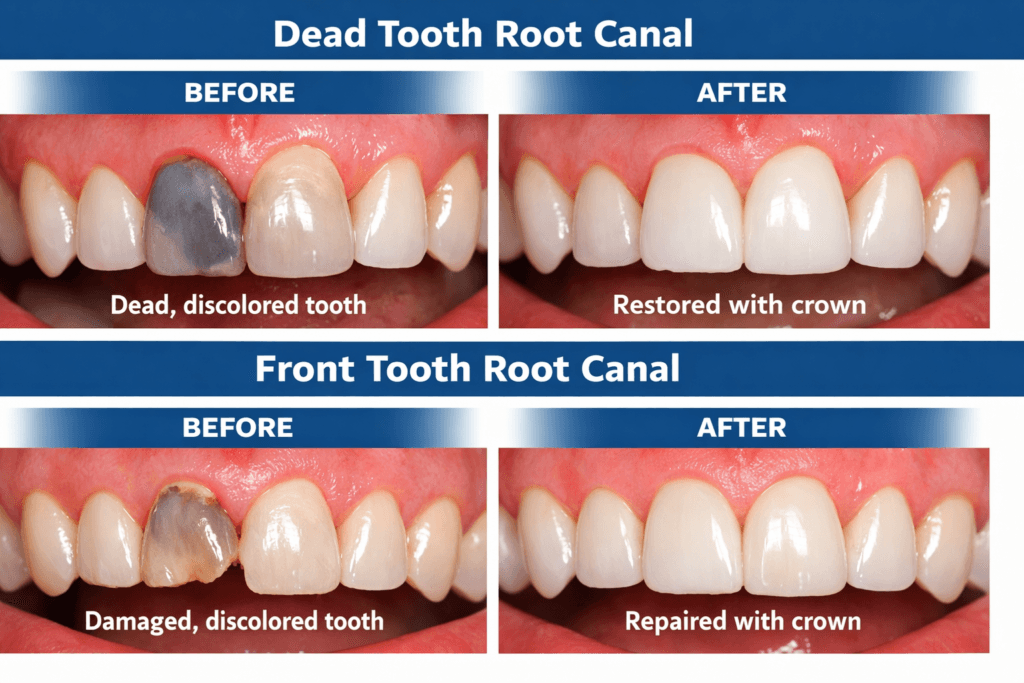
Yes—but in a good way.
Before: Discolored, painful, weak
After: Strong, pain-free, natural-looking (with crown)
Modern dental restorations make root-canal-treated teeth look almost identical to natural teeth.
Mild soreness for 1–3 days
Normal eating resumes quickly
Full strength after crown placement
Long-term results can last 10–15+ years
Absolutely. When compared to extraction, root canal treatment:
Saves your natural tooth
Prevents bone loss
Maintains facial structure
Costs less than tooth replacement long-term
Understanding root canal before and after results helps patients feel confident about treatment. Whether it’s a dead tooth or a front tooth, root canal therapy can save your tooth, relieve pain, and restore your smile.
Yes, a tooth can last a lifetime after a root canal if it is properly restored and well cared for. Placing a crown after treatment, maintaining good oral hygiene, and regular dental checkups significantly increase longevity. Many patients keep their root-canal-treated teeth for decades without problems.
Root canal treatment has a success rate of about 90–95%, making it one of the most reliable dental procedures. Success depends on early treatment, complete removal of infection, proper sealing, and timely placement of a crown. When done correctly, root canals provide long-term pain relief and tooth preservation.
Root canals do not automatically fail after 20 years, but failure can occur if the tooth develops new decay, the crown becomes loose or damaged, or oral hygiene is poor. Many root-canal-treated teeth continue to function well even after 20 years with proper care and periodic dental monitoring.
In most cases, saving your natural tooth with a root canal is better than replacing it with an implant. Root canals preserve natural chewing function, maintain jawbone health, and usually cost less than implants. Dental implants are recommended only when the natural tooth cannot be saved.
Recovery after a root canal is usually quick and mild. Most patients experience slight soreness for 1–3 days, which can be managed with pain medication. Normal chewing can resume once the final crown is placed, and full comfort typically returns within a few days.