Types of Crowns for Teeth

Introduction

Are you confused about choosing the right option from the many types of crowns for teeth available today? You’re not alone.

At Dental Arch India, we meet patients every day who struggle to decide which dental crown is best for their damaged or weakened tooth. With so many types of crowns for teeth from traditional metal crowns to advanced zirconia and porcelain options  making the right choice can feel overwhelming.

Don’t worry. In this comprehensive guide, we’ll explain the different types of crowns for teeth, their pros and cons, costs, and help you understand which option suits your specific dental needs.
Let’s dive in!

What is a Dental Crown

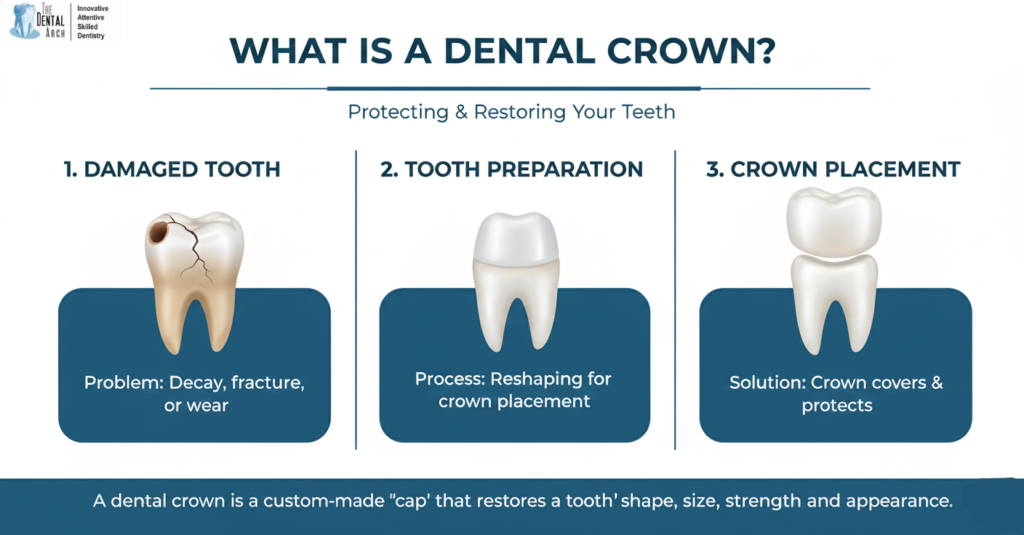
What is a Dental Crown?

A dental crown (also called a “tooth cap”) is a custom-made covering that fits over your damaged, decayed, or weakened tooth. Think of it as a protective helmet for your tooth.
When Do You Need a Dental Crown?

  • After root canal treatment


  •  Severely decayed or broken teeth


  •  Cracked or fractured tooth


  •  To support a dental bridge


  •  Cosmetic improvement of misshapen teeth


  • Protection for weak teeth


  •  Covering dental implants

Types of Dental Crowns: Complete Breakdown

types of crowns for teeth
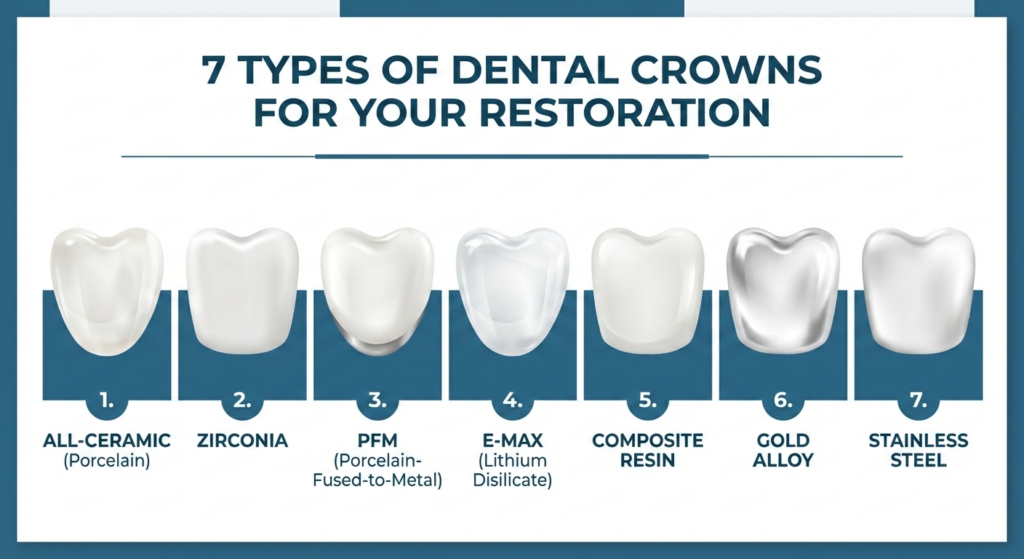
1. Metal Crowns (Gold & Base Metal Alloys)

Metal crowns have been used in dentistry for decades. They’re made from gold alloy, palladium, nickel, or chromium.

Advantages:

  • Extremely durable and long-lasting (15-30 years)

  • Requires minimal tooth removal

  • Rarely chips or breaks

  • Excellent for back teeth (molars)

Disadvantages:

  • Metallic color – not aesthetically pleasing

  • Not suitable for front teeth

  • Some patients have metal allergies

Best For:

 Back molars where strength matters more than appearance

2. Porcelain-Fused-to-Metal (PFM) Crowns

PFM crowns combine the strength of metal with the natural appearance of porcelain. A metal base is covered with tooth-colored porcelain.

Advantages:

  • Natural tooth-like appearance

  • Strong and durable

  • More affordable than all-ceramic options

  • Suitable for front and back teeth

Disadvantages:

  • Metal line may show at gum margin over time

  • Porcelain can chip or crack

  • May cause wear on opposing
    teeth

  • Not ideal if you have metal allergies

Best For:

Patients wanting balance between aesthetics and durability

3. All-Ceramic / All-Porcelain Crowns

 These crowns are made entirely from ceramic material, offering the most natural appearance.

Advantages:

  • Best aesthetic results matches natural teeth perfectly


  • Metal-free ideal for allergies


  • Biocompatible – safe for body


  • Perfect for front teeth

Disadvantages:

  • Less strong than metal or PFM crowns


  • May not be ideal for heavy grinders
  • Can chip under extreme pressure

Best For:

 Front teeth restorations where appearance is priority

4. Zirconia Crowns (Most Popular Choice)

Zirconia crowns are the gold standard in modern dentistry. Made from zirconium dioxide, they offer exceptional strength AND beauty.

Advantages:

  • Strongest ceramic material available


  • Excellent aesthetics – translucent like natural teeth


  • Highly durable – lasts 15+ years


  • Biocompatible – no allergic reactions


  • Suitable for front AND back teeth


  • Minimal tooth sensitivity

Disadvantages:

  • Higher cost compared to PFM


  • Requires specialized equipment for fabrication

Best For:

 Anyone wanting the BEST combination of strength and aesthetics

Our Recommendation: At Dental Arch India, we highly recommend zirconia crowns for most patients due to their unmatched durability and natural appearance.

5. E-Max Crowns (Lithium Disilicate)

E-Max is a premium all-ceramic crown known for its exceptional beauty and translucency.

Advantages:

  • Superior aesthetics  most natural looking crown


  • Excellent translucency  mimics real enamel


  • Strong enough for front and some back teeth


  • Stain-resistant

Disadvantages:

  • Not as strong as zirconia for molars
  • Premium pricing
  • Not ideal for patients who grind teeth

Best For:

 Front teeth where maximum aesthetics is needed

6. Stainless Steel Crowns

These are pre-fabricated crowns mainly used as temporary solutions or for children.

Advantages:

  • Low cost

  • Quick placement – single visit

  • Good for primary (baby) teeth

  • Temporary protection


Disadvantages:

  • Metallic appearance

  • Not custom-made

  • Only temporary solution

Best For:

 Children’s teeth and temporary crowns

7. Resin Crowns (Composite)

Made from composite resin material, these are the most affordable option.

Advantages:

  • Most affordable crown type


  • Tooth-colored appearance


  • Quick to fabricate

Disadvantages:

  • Least durable – wears down quickly


  • Prone to fractures and chips


  • Stains easily over time


  • Shorter lifespan (3-5 years)

Best For:

Temporary solutions or budget-conscious patients
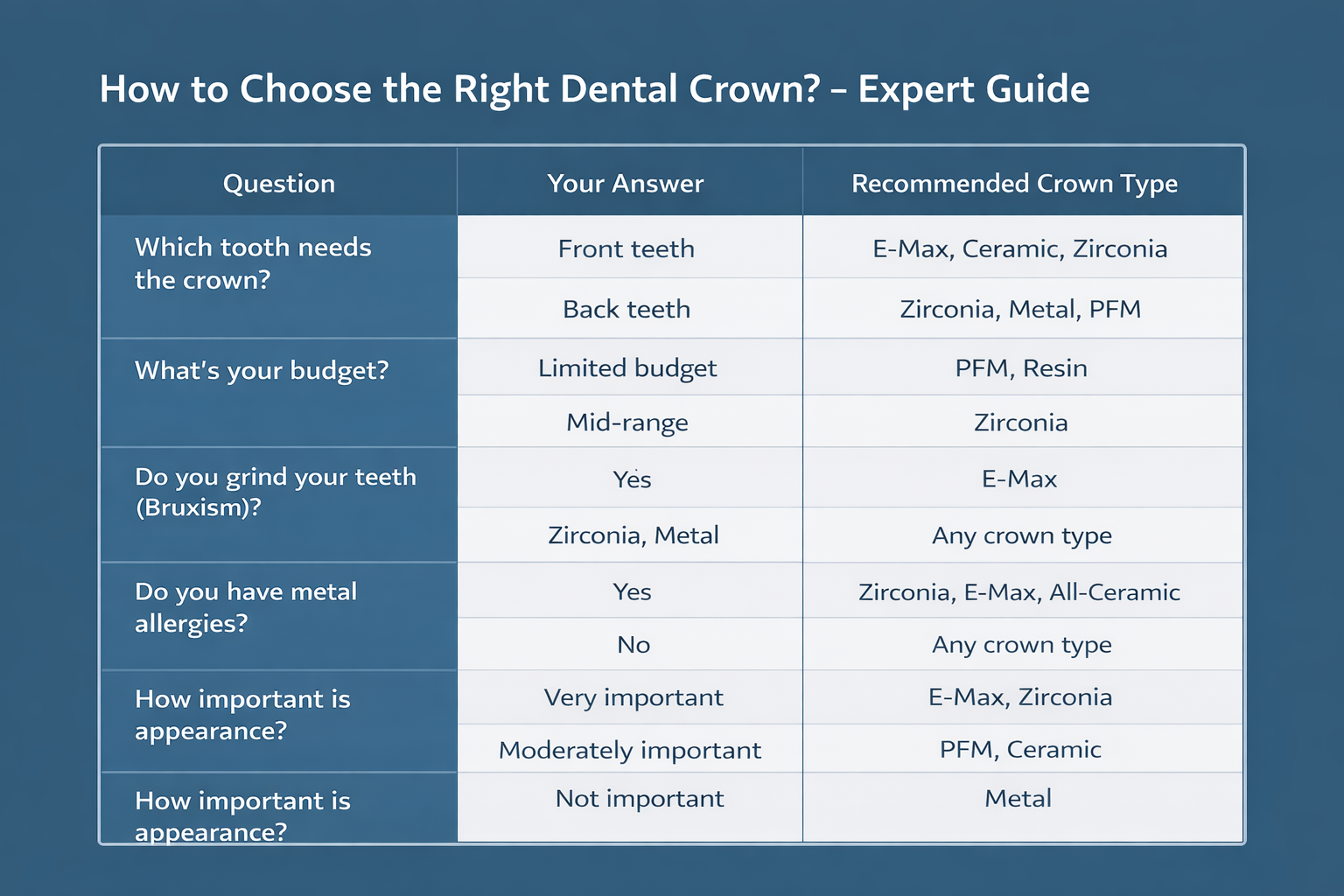
How to Choose the Right Crown? (Our Expert Guide)
How to Choose the Right Crown?
How Long Do Dental Crowns Last?
  • With proper care, here’s what you can expect:

  • Crown Type Average Lifespan

  • Metal 20-30 years

  • PFM 10-15 years

  • Zirconia 15-20+ years

  • All-Ceramic 10-15 years

  • E-Max 10-15 years

  • Resin 3-5 years
Tips to Extend Crown Life:
  • Maintain good oral hygiene

  •  Avoid biting hard objects (ice, pens)

  •  Wear night guard if you grind teeth

  •  Visit dentist for regular checkups

  •  Avoid sticky foods that can dislodge crown

FAQs About Types of Dental Crowns

E-Max or Zirconia crowns are best for front teeth due to their exceptional aesthetics and natural translucency.

Yes, zirconia offers better aesthetics, no metal allergies, superior strength, and longer lifespan compared to PFM crowns.

The procedure is done under local anesthesia, so you won't feel pain. Some sensitivity after the procedure is normal and temporary.

The crown itself cannot decay, but the tooth underneath can. Proper oral hygiene is essential.

Costs range from ₹3,000 to ₹25,000 depending on the crown type and material.

Zirconia and metal crowns are the strongest options available.