
White spots on teeth (also called white patches on teeth) are a common dental concern. They may appear suddenly or develop over time, affecting the appearance and sometimes the health of your teeth. While some white spots are harmless, others can be an early sign of tooth decay.
In this blog, we’ll explain why white spots appear, whether they are dangerous, and how to remove white spots on teeth naturally or professionally.
White spots are areas where the tooth enamel has lost minerals. This process, known as demineralization, changes the enamel’s structure, making it look chalky or cloudy instead of shiny.
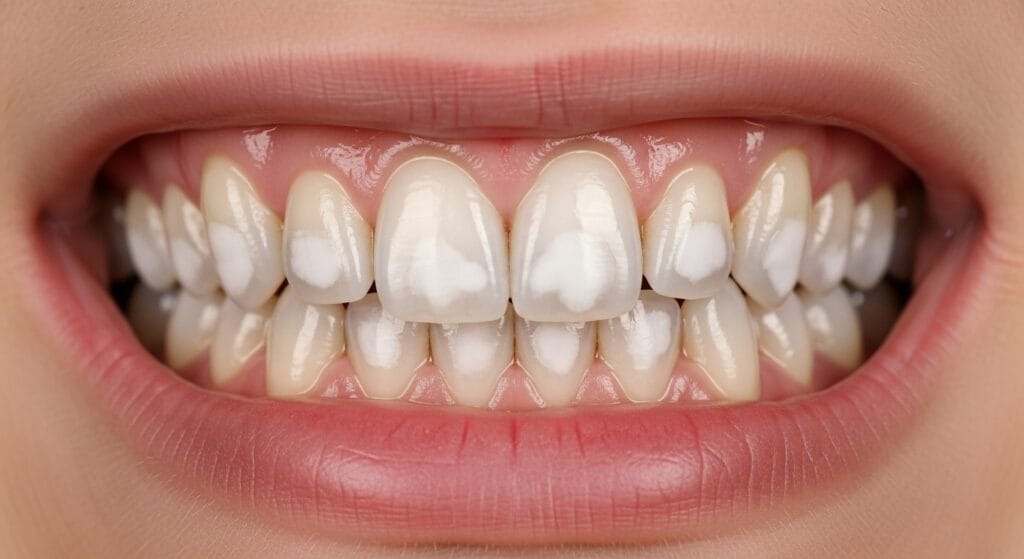
These occur when calcium and minerals are unevenly deposited during tooth development or due to enamel damage. They are often seen after braces or orthodontic treatment.
Plaque buildup prevents minerals from reaching the enamel, leading to white spots on teeth—especially near the gum line.
Excess fluoride intake during childhood can cause white patches on teeth, ranging from mild white marks to noticeable discoloration.
Tooth decay white spots on teeth are an early warning sign of cavities. At this stage, damage may still be reversible.
Frequent exposure to acids or reduced saliva weakens enamel, making white spots more likely.
Yes, sometimes. Tooth decay white spots on teeth indicate early enamel breakdown. If decay progresses and fillings aren’t enough, root canal treatment may become necessary.
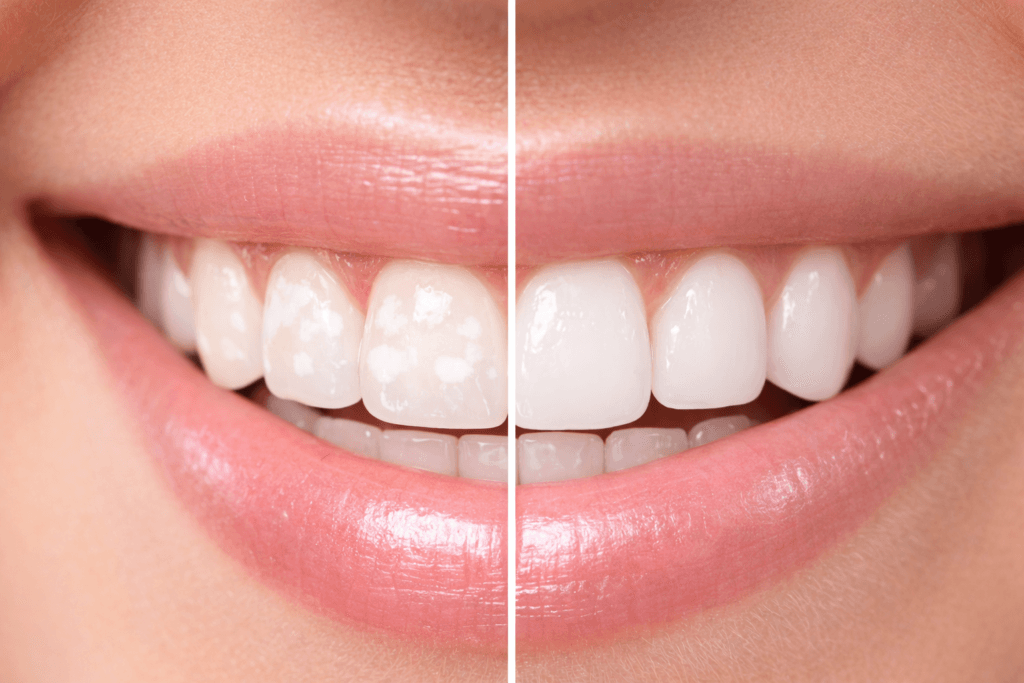
Fluoride application – helps remineralize enamel
Dental bonding or veneers – for stubborn white calcium spots
Microabrasion – gently removes surface stains
Teeth whitening – evens out overall tooth color
Your dentist will recommend the best option based on severity.
If the spots are mild, these natural methods may help:
Use fluoride toothpaste regularly
Improve brushing and flossing habits
Drink more water to prevent dry mouth
Reduce sugary and acidic foods
Chew sugar-free gum to boost saliva
Note: Natural methods work best for early or mild cases.
Yes!
Brush twice daily with fluoride toothpaste
Floss regularly
Avoid excessive fluoride in children
Visit your dentist every 6 months
You should consult a dentist if:
White spots are increasing
You feel sensitivity or pain
The spots look chalky or rough
Early treatment prevents cavities and restores tooth appearance. In severe cases where decay has extensively damaged the tooth, tooth extraction may be required to prevent further oral health issues.
White spots on teeth and white patches on teeth are common but manageable. Whether caused by white calcium spots, poor hygiene, or early decay, timely care can restore your smile and protect your teeth.
If you’re unsure about the cause, a dental check-up is the best first step.
White spots on teeth can be removed depending on their cause and severity. Mild white spots caused by mineral loss may improve with fluoride treatment and good oral hygiene, while deeper or long-standing spots may need professional dental procedures like microabrasion, teeth whitening, or dental bonding. A dentist can recommend the best option after examining your teeth.
If the white spots are mild, you can reduce their appearance naturally by:
Brushing twice daily with fluoride toothpaste
Flossing regularly to remove plaque
Drinking plenty of water to prevent dry mouth
Reducing sugary and acidic foods
Chewing sugar-free gum to increase saliva flow
Natural methods help in early stages but may not fully remove deep white spots.
White spots on teeth can be removed using:
Fluoride or remineralizing treatments
Professional teeth whitening
Enamel microabrasion
Dental bonding or veneers for severe cases
Early treatment improves results and may prevent cavities.
To get rid of white spots on teeth:
Maintain proper oral hygiene
Treat early enamel damage quickly
Visit a dentist for professional evaluation
In many cases, early white spots can be reversed before they turn into cavities.
White spots on teeth occur due to:
Loss of minerals from tooth enamel
Poor oral hygiene and plaque buildup
Excess fluoride exposure (fluorosis)
Wearing braces without proper cleaning
Early tooth decay
Identifying the cause is important to choose the right treatment.