
Brushing your teeth every day is essential for oral health, but if your teeth still look yellow, you’re not doing anything wrong.
Brushing alone cannot change natural tooth color, enamel thickness, or internal discoloration.
Let’s understand the real reasons why teeth appear yellow despite daily brushing and what actually helps.
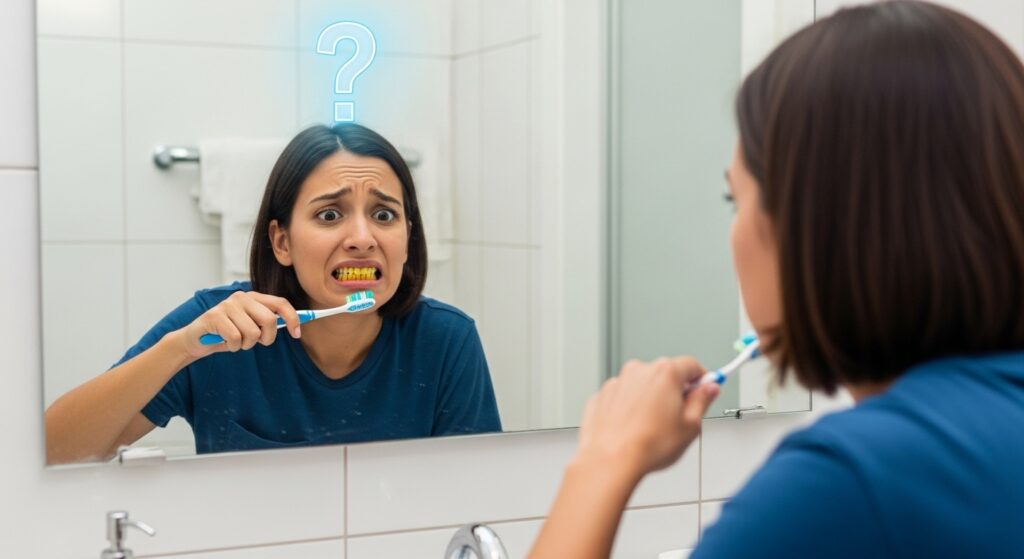
Teeth can look yellow even if you brush every day because brushing only removes surface plaque. Natural tooth color, thinning enamel, exposed dentin, stains, tartar buildup, genetics, and aging can all cause yellow teeth despite good oral hygiene.
Many people don’t realize this, but healthy teeth are not bright white.
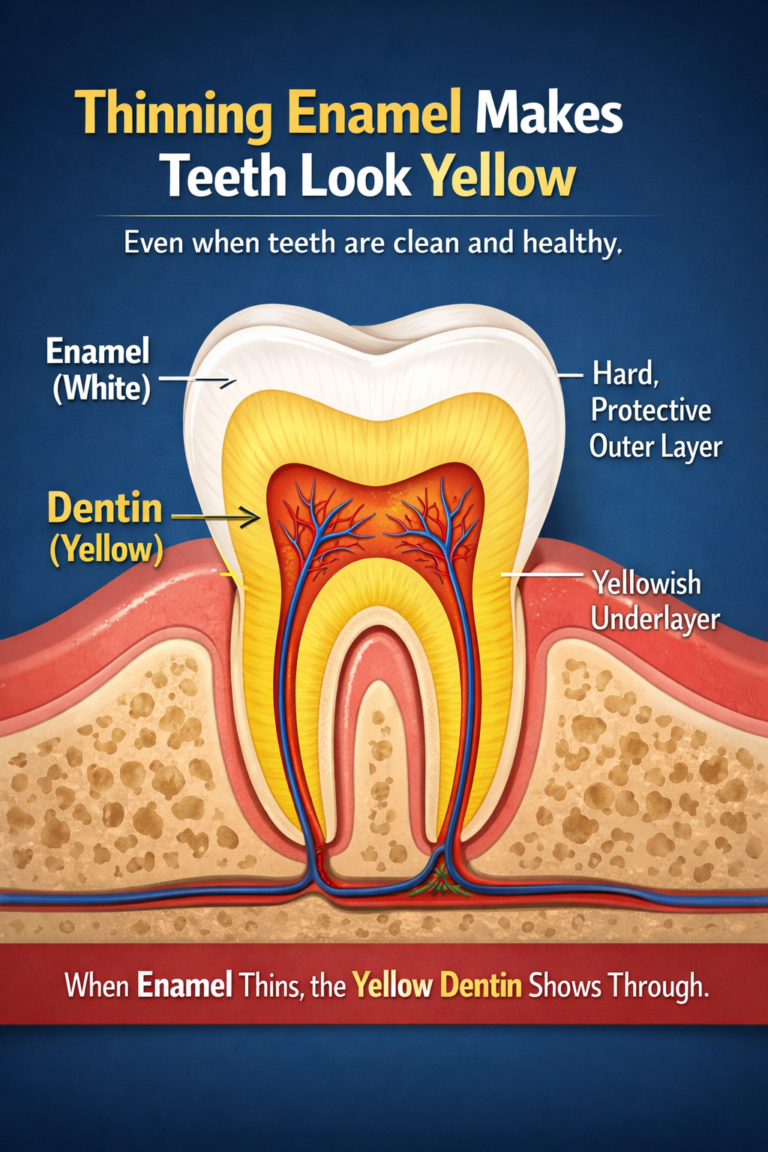
Each tooth has two main layers:
| Tooth Layer | Color | Role |
|---|---|---|
| Enamel | White / translucent | Outer protective layer |
| Dentin | Yellow | Inner structural layer |
If your enamel is thin or translucent, the yellow dentin shows through, making teeth look yellow — even when they’re clean.
Enamel does not regenerate.
It can wear down due to:
Brushing too hard
Using hard-bristle toothbrushes
Acidic foods and drinks
Teeth grinding (bruxism)
Acid reflux (GERD)
As enamel thins, teeth appear more yellow over time, no matter how often you brush.
Daily brushing helps, but it doesn’t remove deep or long-term stains.
Common staining foods and habits:
Tea and coffee
Red wine
Cola and dark sodas
Turmeric, curry, and spices
Smoking or tobacco use
These cause extrinsic stains that slowly attach to enamel and make teeth look dull or yellow.
Even people who brush twice a day often miss:
The gumline
Between teeth
Back molars
When plaque hardens, it becomes tartar (calculus), which:
Looks yellow or brown
Cannot be removed by brushing
Makes teeth appear permanently dirty
Only professional dental scaling can remove tartar.
Some people naturally have:
Thinner enamel
Darker dentin
More porous enamel (absorbs stains easily)
If yellow teeth run in your family, brushing alone won’t change that — and it’s completely normal.
As we age:
Enamel wears down
Dentin darkens
Years of stains accumulate
That’s why adults often have yellower teeth than children — even with excellent oral hygiene.
Certain medications and conditions can discolor teeth, especially if exposure happened during tooth development.
Examples include:
Tetracycline antibiotics
Excess fluoride (fluorosis)
Some antihistamines and blood pressure medicines
Trauma to a tooth (injury)
These stains are often internal and cannot be removed with brushing or whitening toothpaste.
This is a common mistake.
Brushing too hard can:
Wear down enamel
Expose dentin
Cause gum recession
Increase tooth sensitivity
Result? Teeth appear more yellow, not whiter.
Yes — yellow teeth can be perfectly healthy.
Healthy teeth can be:
Strong
Cavity-free
Properly cleaned
…and still appear yellow due to enamel thickness or genetics.
Tooth color ≠ tooth health.
Improve Brushing Technique
Use a soft-bristle toothbrush
Gentle circular motions
Brush for 2 minutes, twice daily
Most yellow buildup starts between teeth.
Rinse After Staining Foods
Water helps reduce stain attachment.
Get Professional Dental Cleaning
Scaling removes tartar that brushing cannot.
Consider Whitening (If Suitable)
Professional whitening works best for surface stains — not everyone is a candidate.
Teeth suddenly turn yellow or dark
There is pain or sensitivity
Gums are bleeding or receding
One tooth changes color
You want safe whitening options
If your teeth are yellow despite brushing every day, it doesn’t mean poor hygiene.
It means tooth color is influenced by much more than a toothbrush.
Understanding the cause helps you choose the right solution without damaging your teeth.
Brushing every day cleans plaque from the surface of your teeth, but it does not change natural tooth color. Teeth may still look yellow due to thin enamel, exposed dentin, genetics, aging, tartar buildup, or long-term stains. Even healthy, well-brushed teeth can appear yellow.
Yes, yellow teeth can become whiter depending on the cause. Surface stains and tartar can often be removed with professional cleaning or whitening. However, teeth that appear yellow due to thin enamel, genetics, or internal discoloration may not turn bright white with whitening alone.
No, yellow teeth are not always unhealthy. Many people naturally have yellowish teeth that are strong and free from cavities. Tooth color does not always indicate poor oral hygiene or disease. Healthy teeth can still look yellow because of enamel thickness, age, or genetics.
Some teeth do not respond well to whitening, including teeth with internal discoloration from medications (such as tetracycline), fluorosis stains, severely worn enamel, or dental restorations like crowns, veneers, and fillings. In these cases, cosmetic treatments such as veneers or bonding may be needed.
No, tooth enamel cannot be fully restored once it is lost. However, enamel can be strengthened and protected through fluoride treatments, remineralizing toothpaste, and good oral habits. Preventing further enamel loss is key to reducing yellow appearance and maintaining healthy teeth.