
Experiencing dental distress can be an incredibly distracting and debilitating experience. Many patients visit the dentist with one central question: “why my teeth is paining?” Dental pain is your body’s way of signaling that something is wrong, ranging from minor irritation to a severe infection that requires immediate attention.
In this guide, we will break down the common causes of toothaches, explore specific triggers like sugar, and help you understand the urgency behind various types of oral discomfort.

There are several reasons you might be asking “why my teeth is paining.” Identifying the type of pain can often lead to the underlying cause:
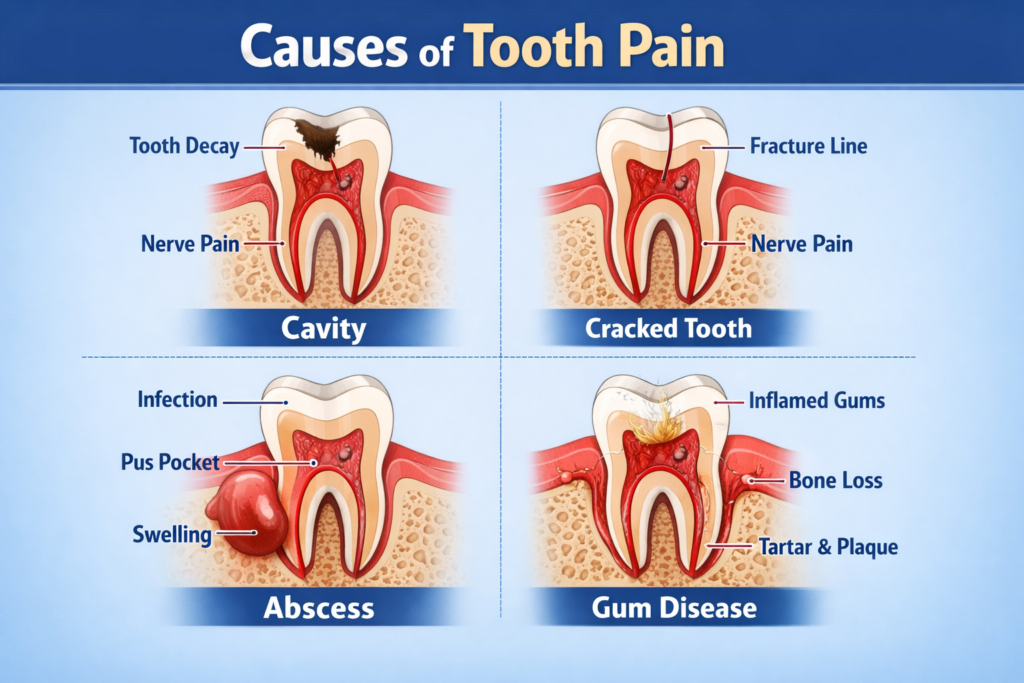
A very specific complaint many people have is: “why my teeth is paining when i eat sweets?” This sensitivity to sugar is usually a red flag for enamel erosion or a developing cavity.
When you consume sugar, the bacteria in your mouth produce acid. If your enamel is thin or there is a hole in the tooth, that acid and sugar reach the dentin, the layer containing tiny nerve endings. This results in a sharp, sudden flash of pain. If you find yourself asking “why my teeth is paining when i eat sweets,” it’s a sign that the protective barrier of your tooth has been compromised. Ignoring the question of “why my teeth is paining when i eat sweets” can lead to the need for more invasive treatments like root canals later on.
If the pain isn’t triggered by food but is a persistent throb, you likely want to know: “why is my teeth paining constantly?” Constant pain is usually more concerning than intermittent sensitivity.
When someone asks “why is my teeth paining constantly,” it often points to an inflammation of the dental pulp (pulpitis) or an infection. Unlike a temporary ache, the reason “why is my teeth paining constantly” is often that the nerve is under sustained pressure from swelling or pus. This constant state of “alarm” from your nerves means the body cannot resolve the issue on its own. If you are wondering “why is my teeth paining constantly,” you should check for accompanying symptoms like fever or swelling in the cheek, as these indicate the infection might be spreading.
When you address the root cause of why my teeth is paining, you often open the door to improving your overall oral aesthetics. For instance, if the reason why my teeth is paining is a cracked or decayed front tooth, a smile makeover involving crowns or veneers can both eliminate the pain and enhance your appearance.
At modern Dental clinics, treating the question of why my teeth is paining involves high-tech diagnostics to ensure the solution is long-lasting. Whether it’s a simple filling to stop why my teeth is paining when i eat sweets or a more complex procedure to fix why is my teeth paining constantly, professional intervention is key to returning to a pain-free life.
Understanding why my teeth is paining is the first step toward relief. Whether you are dealing with the sharp sting of why my teeth is paining when i eat sweets or the exhausting throb of why is my teeth paining constantly, listen to what your body is telling you. Dental pain rarely disappears on its own; it usually evolves. By identifying why my teeth is paining early, you can save your tooth, your money, and your peace of mind.
Tooth pain often feels worse at night because when you lie down, blood flow to the head increases. This added pressure can intensify pain in an already inflamed or infected tooth. Nighttime also brings fewer distractions, making the discomfort more noticeable. If the pain wakes you from sleep, it may signal a cavity, cracked tooth, gum infection, or nerve inflammation.
Even with good brushing habits, tiny cracks, deep grooves, worn enamel, or early cavities can allow sugar to reach the sensitive inner layer of the tooth. Sugar feeds bacteria, which release acids that irritate the nerves and cause sharp pain. This is often an early warning sign of enamel damage or developing decay.
Mild sensitivity for a few days after a filling is normal. However, constant pain lasting more than a week may occur if the filling is slightly high, putting pressure on your bite, or if the tooth’s nerve is irritated. In some cases, deeper decay may require further treatment, such as adjusting the filling or performing a root canal.
Yes. The roots of your upper back teeth sit close to the sinus cavities. When your sinuses become inflamed or infected, the pressure can press on these nerves and cause tooth pain. This pain often affects several upper teeth at once and usually worsens when bending forward.
If the cause isn’t obvious, you should schedule a dental exam and X-ray. Many dental problems—such as hidden cavities, cracked teeth, bone infection, or gum disease—are not visible during a basic check. Early diagnosis prevents complications and more costly treatment later.
Yes. Constant tooth pain can indicate serious conditions such as an abscess or nerve infection. If the infection spreads into the bloodstream, it can become life-threatening. Ongoing pain should never be ignored—prompt dental treatment is essential for your health and safety.